


Attending a Japanese wedding or celebratory event for the first time can be daunting, especially when it comes to gift-giving. Although it may seem complicated, we’ll break it down so that you have nothing to worry about.
In Japanese culture, it is customary to give money as a gift in money envelopes, depending on the situation. If you visited a Japanese stationery store, you may have seen a section dedicated to elegant envelopes tied with a knot or bow.
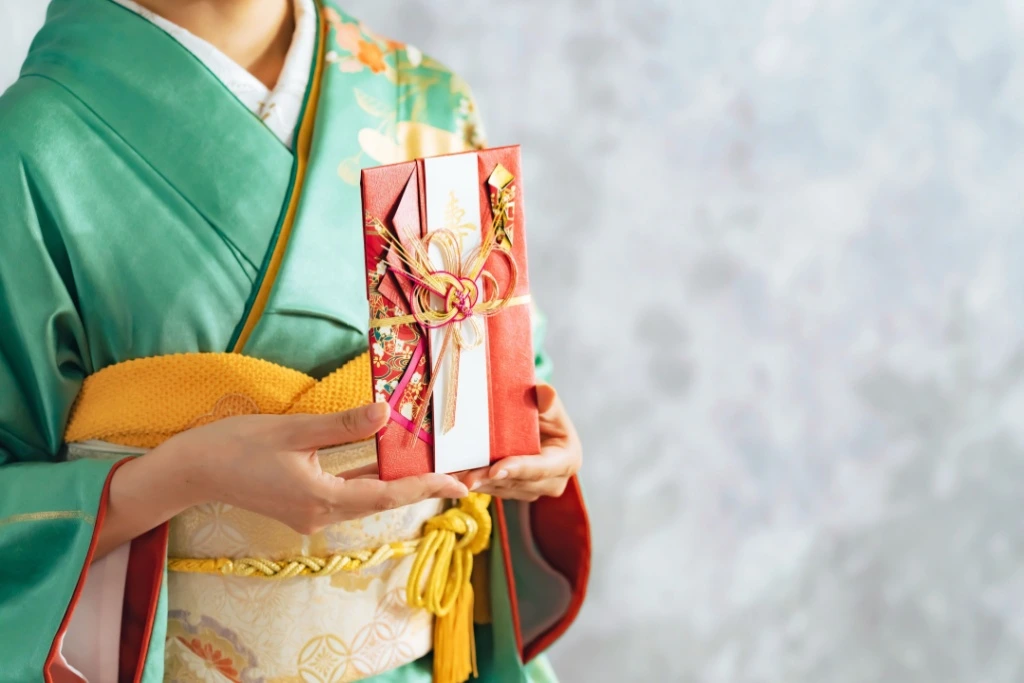
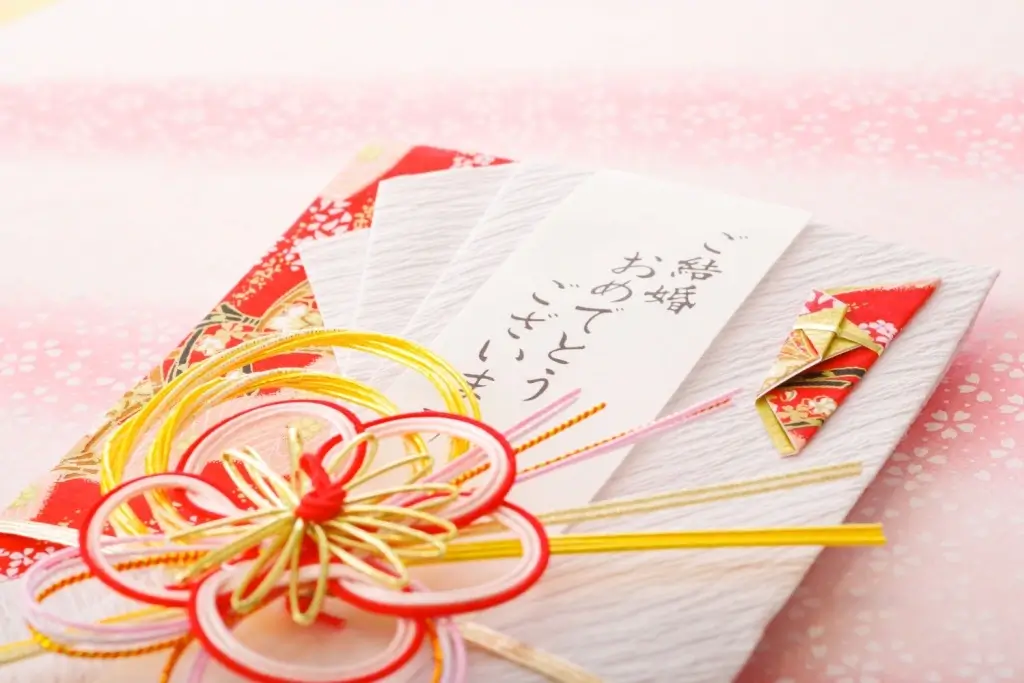
Money envelopes, specifically ones for celebratory occasions, are called shugi bukuro in Japanese. The word shugi bukuro translates to “celebratory gift bag.” People use these beautifully ornate envelopes as gifts at weddings, graduations, and other auspicious occasions. One of the main components of shugi bukuro is the mizuhiki, a bow formed from a ceremonial cord. Depending on the situation, certain combinations of mizuhiki colors might be more suitable.
The importance of colors
In Japanese culture, mizuhiki colors can have different meanings. Red and white symbolize auspicious events, silver represents sincerity, and gold stands for happiness and wealth. The standard mizuhiki colors for celebrations are red and white. If you are unsure of which colors to use, these are a safe bet.
One of the most formal color combinations is gold and silver. You use it if you are giving a significant monetary amount above ¥50,000 ($331) or for a 60th birthday (an auspicious age in Japanese culture). Red and gold are commonly used for Japanese religious ceremonies and New Year decorations.
Money amount matters
The amount of money you give is crucial as certain amounts are unlucky. For example, the number four can have the same pronunciation as the word for death in Japanese. You should never give amounts of ¥40,000 ($262), ¥60,000 ($394), and ¥90,000 ($590). Generally, any even amount of money is frowned upon because it is divisible. It is a bad omen, especially at weddings.
For weddings, the expected amount that you give can vary depending on your relationship with the couple. If you are a student, it is usually ¥10,000 ($65). For single friends or colleagues, the cost is approximately ¥30,000 ($196). Married couples will give ¥50,000 ($331), while bosses will provide that amount or ¥70,000 ($458). Additionally, the bills should be clean and new to symbolize purity. For marriage, it represents the couple starting anew together.
How to use
It is vital to choose the correct style of shugi bukuro. Wedding ones typically have a noshi, an auspicious lucky sign/decoration on the top right corner of the envelope. However, it is not necessary to get one with it. Interestingly, the Japanese used abalone shellfish for noshi in the past! In modern times, though, paper wrapping has replaced it.
Another significant detail is the method used to create the mizuhiki knot. By choosing a shugi bukuro with a musubikiri or awajimusubi knot, these symbolize a long-lasting marriage that will strengthen over time. Do not use a bow knot/shoelace knot, known as chomusubi, for weddings because it can easily untie and re-tie. Instead, a mizuhiki with a chomusubi knot is best for celebrations that you want to happen again.
Traditionally, people write on the shugi bukuro using a brush and ink. However, there are pens available that mimic the same texture. A fudepen is essentially a combination of an ink brush and a fountain pen, used in East Asian calligraphy. Some brushes are double-sided, with one tip containing dark black ink and the other containing greyish-black ink. The lighter one is only for writing on funeral envelopes.
Setting it up
Shugi bukuro contains two envelopes: the inner and outer. The plain, inner envelope holds the monetary gift. On the front side, you can write the amount of money that is within. On the back, where you tape or glue the flap shut, you write the gift giver’s name and address. The decorative envelope then encloses it.
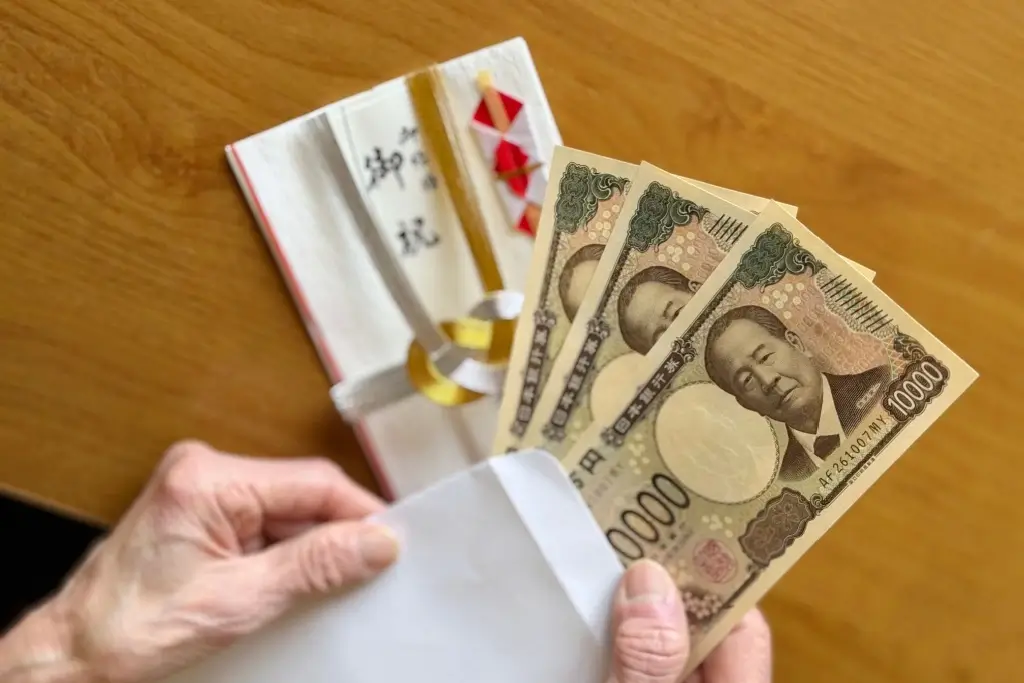
Inside the inner money envelope, all the bills should be facing the same direction, with the front of each bill facing forward. When the recipient opens the envelope, they will see the face on the bill appear above the written amount of money.
Want to dive deeper into traditional Japanese culture? Explore what Sakuraco has to offer! Sakuraco delivers classic Japanese teas, ceramics, and sweets from local Japanese businesses straight to your door!
When placing the inner envelope inside the outer, adorned one, it should be facing upwards. This way, you stack the closed shugi bukuro in the same direction as the mizuhiki knot. The bow knot must point upwards; otherwise, it will become a funeral envelope.
Closing the shugi bukuro
Now that the inner envelope is inside, you can fold the front mizuhiki side over it. There are two flaps on the outer envelope. To close it, fold the upper flap and then fold the lower flap over it. This small action traditionally wishes for happiness not to spill out.
A shugi bukuro will typically come with a few rectangular, long strips of paper that are blank or have writing on them. The ones with writing have congratulatory messages, while a blank one allows you to write your own message. You just need to choose one of these strips to use and ensure that you include your name in katakana at the bottom. From there, you can place the strip of paper underneath the mizuhiki knot. Your name should be below the knot, with the message above it.
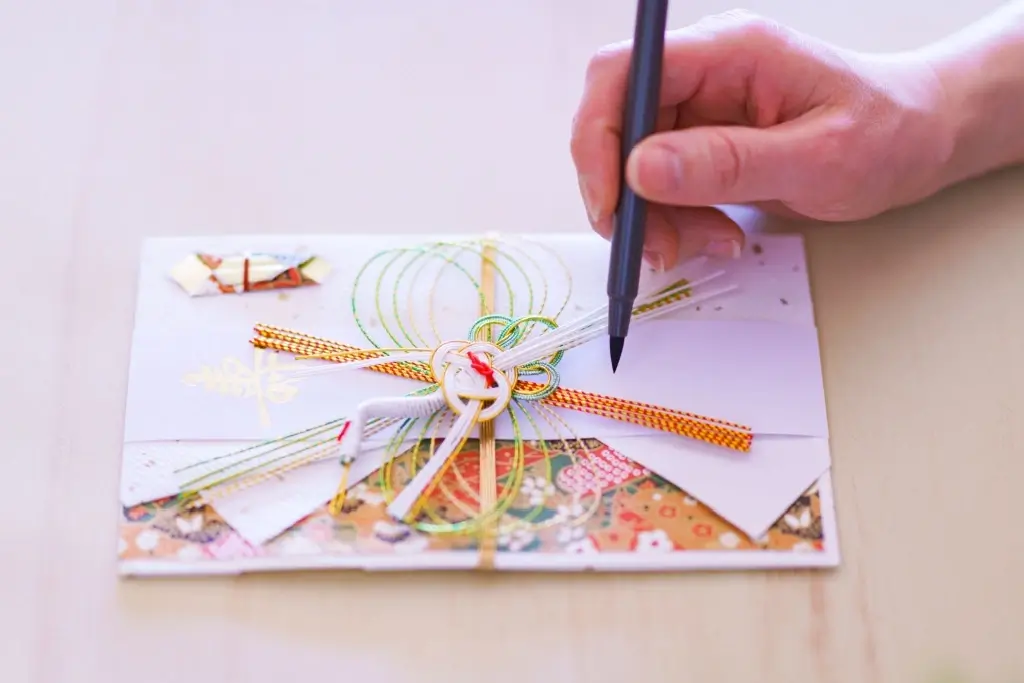
How to choose and where to buy them
Select a money envelope corresponding to the amount of money you are giving. To make it easier, some envelopes have recommended amounts of money to put into them. A general rule to remember is that the simpler the design, the less money there is inside. Whereas a more luxurious shugi bukuro signifies a higher amount. It’s best to use formal and classic designs for business relationships, while with friends you can use unique and cutely designed shugi bukuro.
Stationery stores across Japan carry a wide variety of shuri bukuro. One example would be Itoya. Founded in 1904, Itoya is a well-regarded Japanese stationery chain known for its traditional and classic paper goods. Their flagship store in Ginza, Tokyo, spans 12 stories, making it an excellent stop for stationery enthusiasts.

If you are still unsure about which shugi bukuro to choose, ask a staff member at the store! This way, you can feel confident in the shugi bukuro that you decide to buy. Shugi bukuro make unique souvenirs to bring back home, and they are a great way to learn more about Japanese culture. Also, if you are invited to a Japanese wedding or celebration, using shugi bukuro shows your respect and sincerity. Have you ever used these money envelopes before, or would you be interested in buying one? Comment below!