


The number of historic neighborhoods in Japan seems endless. But none deserve the title more than Gion in eastern Kyoto. This small section of the city on the banks of the Kamo River is the birthplace of numerous customs that embody Japan’s very spirit. It began as a mere rest area, used briefly by travelers on the way to their final destinations.
But it became the most crucial living reservoir of Japanese culture in the country. It is a time capsule in which people live, work, and play precisely as they did centuries ago. Let’s learn about this area, its rich past, cultural significance, and modern allure.
What is the history of Gion?
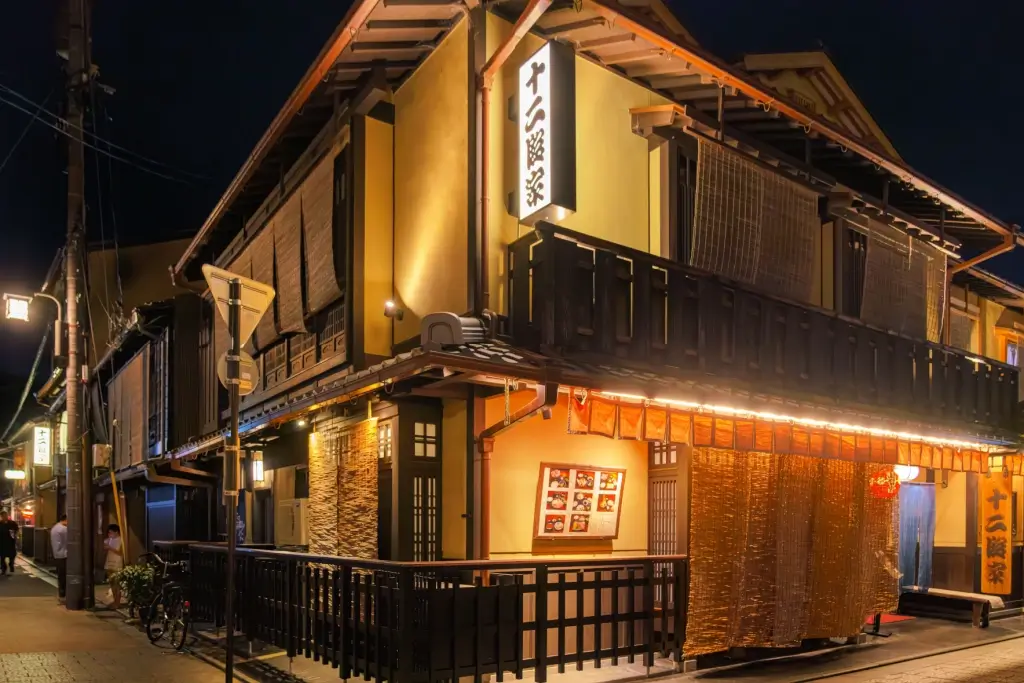
The origins of this incredible neighbourhood trace back to the late 1300s. It gets its name from Yasaka Shrine, which is located in the same area, and was previously known as Gion. This spiritual site once attracted pilgrims from all over the country. And the then humble collection of dwellings was conveniently located along the route, between the holy spot and the river. It became a popular layover for travelers, offering services and providing pilgrims with food and lodging. As its popularity grew throughout the years, it slowly evolved into an entertainment hub. It eventually became well known among patrons of traditional Japanese arts.
Why did geisha become so popular in Gion?
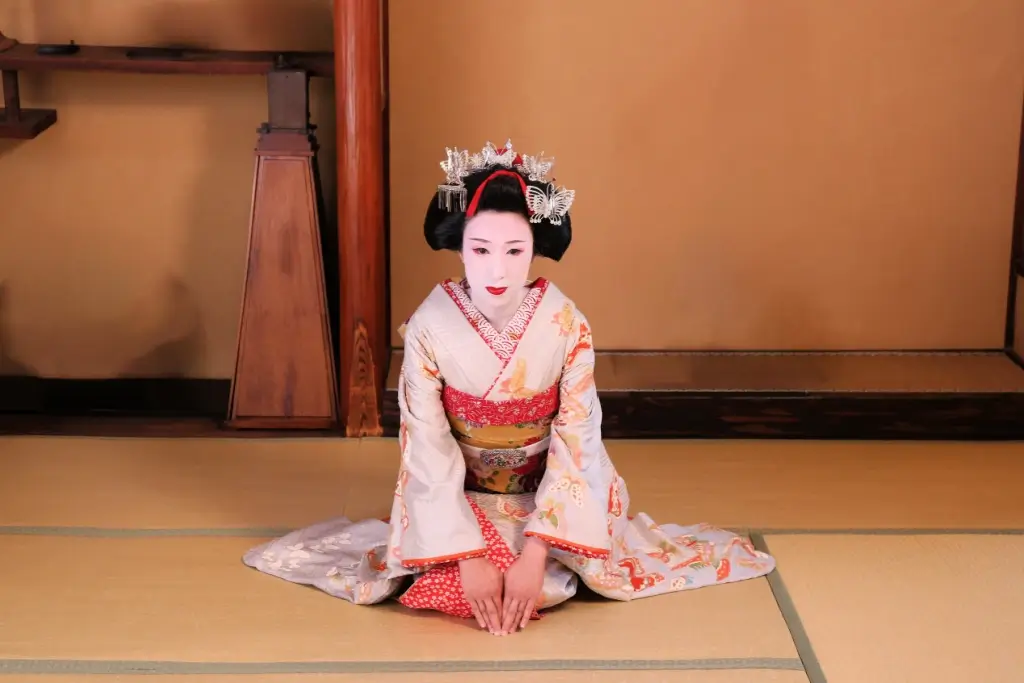
The growth of this corner of Kyoto is closely linked to the rise of kabuki and geisha during the Edo period (1603 – 1868). As its entertainment industry flourished, it also began to evolve. Dancing, music, and teahouses (machiya) became more refined to compete for the ever-increasing number of visitors. Geisha culture was the endpoint and perfection of this refinement. The Minamiza area in the southern Higashiyama district became the neighborhood’s cultural center and central geisha district. It continued to grow until it eventually had to be split into two in 1881 to make the organization easier – the Kobu and Higashi sections.
Are you looking for interesting snacks from Kyoto? Check out Sakuraco! Sakuraco delivers traditional Japanese snacks, teas, and sweets from local Japanese makers directly to your door so you can enjoy the latest treats directly from Japan!

What attractions are there in Gion?
Minamiza Theater
The Minamiza Theater was built in the early Edo period and is considered the birthplace of kabuki and geisha. It is one of Japan’s oldest kabuki venues, even older than those in Tokyo and Osaka. It is a prominent landmark and the gateway to this traditional district. Today, it is situated at the eastern end of Shijo-dori, at the Kawabata-dori intersection, directly accessible from Gion-Shijo Station.
Yasaka Shrine
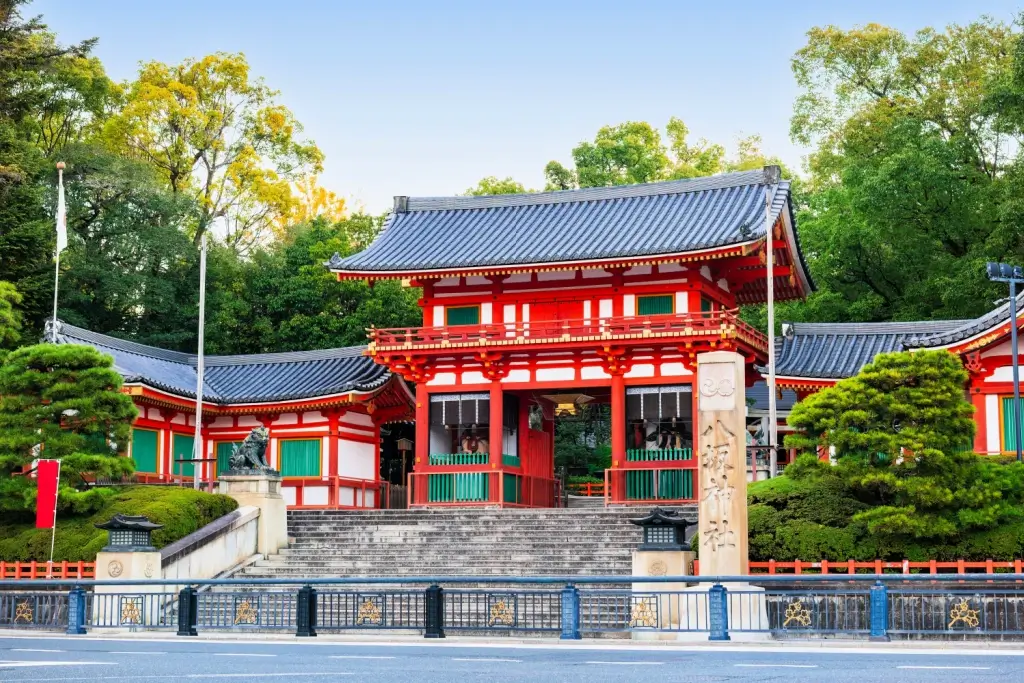
Also on Shijō Street, Yasaka Shrine is still a spiritual draw after hundreds of years. Its two-story Nishi-Romon (West Tower) Gate is the most frequently used and photographed entrance to the shrine. This striking vermilion gate and the grounds are a popular attraction, especially during lantern festivals.
Kenninji Temple
Kenninji is Kyoto’s oldest Zen temple. It was founded in 1202 by the monk Eisai. He is an essential figure in Japanese history. He introduced Rinzai Zen Buddhism to Japan after his studies in China, along with tea seeds and the cultivation practices that helped spark the Japanese tea tradition.
This temple offers a peaceful contrast to the lively neighborhood around it. It contains beautiful Zen gardens, sliding-door paintings, and a striking ceiling artwork of twin dragons by artist Junsaku Koizumi. It is located at the southern end of Hanamikoji Street in the heart of Gion.
Shirakawa Canal
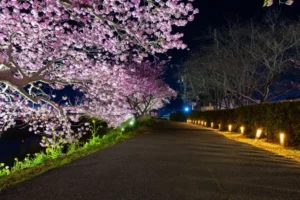
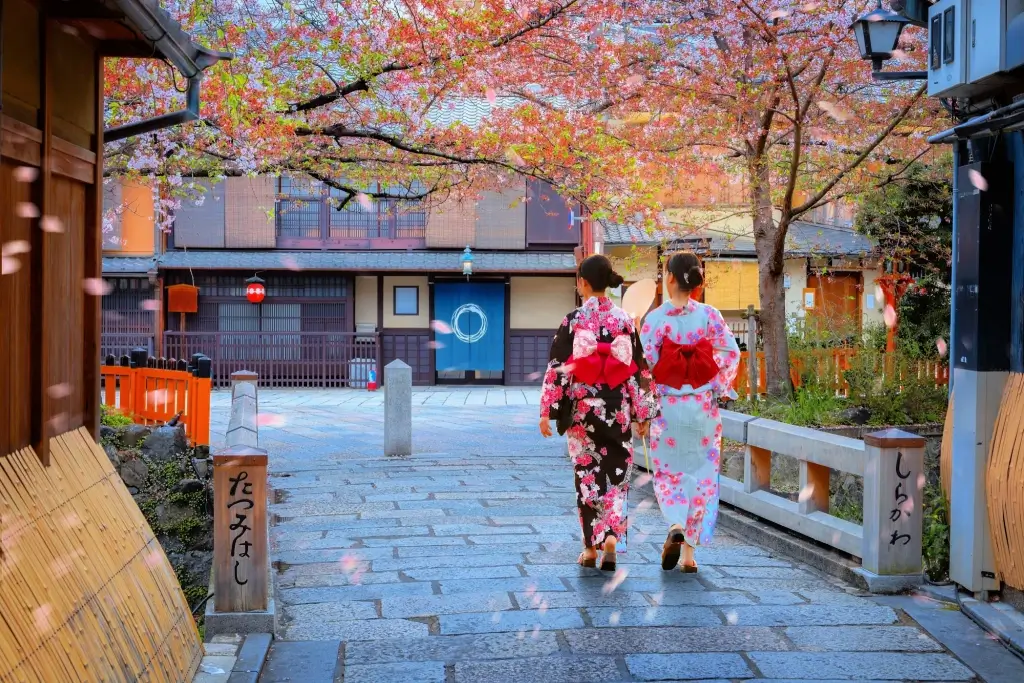
The Shirakawa Canal is near Hanamikoji Street, a short stroll from Shijo Avenue and Yasaka Shrine. The canal winds through the district’s quieter northern part. It is lined with graceful willow and cherry blossom trees hanging low over the water. The area is popular for strolls along the riverbanks. The elegant wooden bridges and lanterns of the many traditional teahouses in the area make for beautiful nighttime scenery.
Visiting Tips for Gion
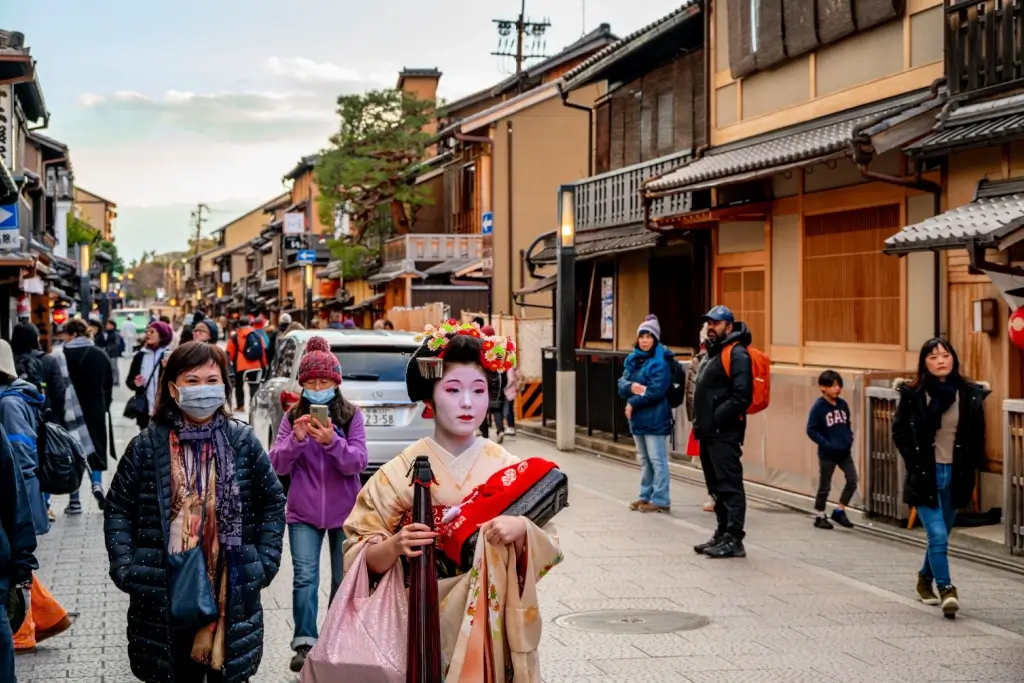
Gion-Shijo Station on the Keihan Line is the most convenient for quick access. The most popular times to visit are spring and fall, when the weather is mild, and the trees are colorful. You can avoid crowds by going early in the morning or late in the afternoon. But wear comfortable shoes – the cobblestone paths can be complex on the feet. If your goal is to see geisha, they can usually be spotted wearing their kimono on their way to work in the early evenings.
However, be respectful when you’re in the area. There are rules against photographing geisha without permission, hindering their paths. Approaching them for photos can have serious repercussions. Exploring alleys is a great way to discover hidden shrines and shops. The Edo-era architecture is so well-preserved that many restaurants still serve meals in traditional Japanese buildings. Guided tours are also available. The district celebrates Gion Matsuri each July, with local communities hosting parades, food stalls, and rituals.
Why is Gion so important in Japanese culture?
Gion is essential in Japanese culture because it safeguards the legacy of geisha, geiko, and maiko amid changing times. It also indirectly preserves the Japanese arts used in their performances, such as traditional dance, songs, and shamisen playing. Tea was first introduced to the country through this Kyoto district, and its many teahouses provided the environment in which geisha culture could form and evolve. Have you visited this famous Kyoto neighborhood? What advice do you have for first-time visitors? Feel free to share your favorite spots, travel advice, and experiences in the comment section below!