


Kyoto shrines preserve history within their walls, and their network carries the old days into modern Japan. Visiting them can be a memorable way to learn about Japan’s past and understand how spiritual traditions coexist with modern life. Among the many sanctuaries, five Kyoto shrines stand out. Read on to discover and learn more about them!
What is a shrine?
In Japan, shrines are places dedicated to kami, which can be gods, spirits of nature, or historical figures honored over time. People visit shrines to pray for good fortune, celebrate festivals, reflect during important life moments, and show gratitude. Shinto, which means “the way of the gods” in Japanese, emphasizes harmony between people and the natural world. This is why many shrines are surrounded by dense forests, flowing water, or quiet gardens.
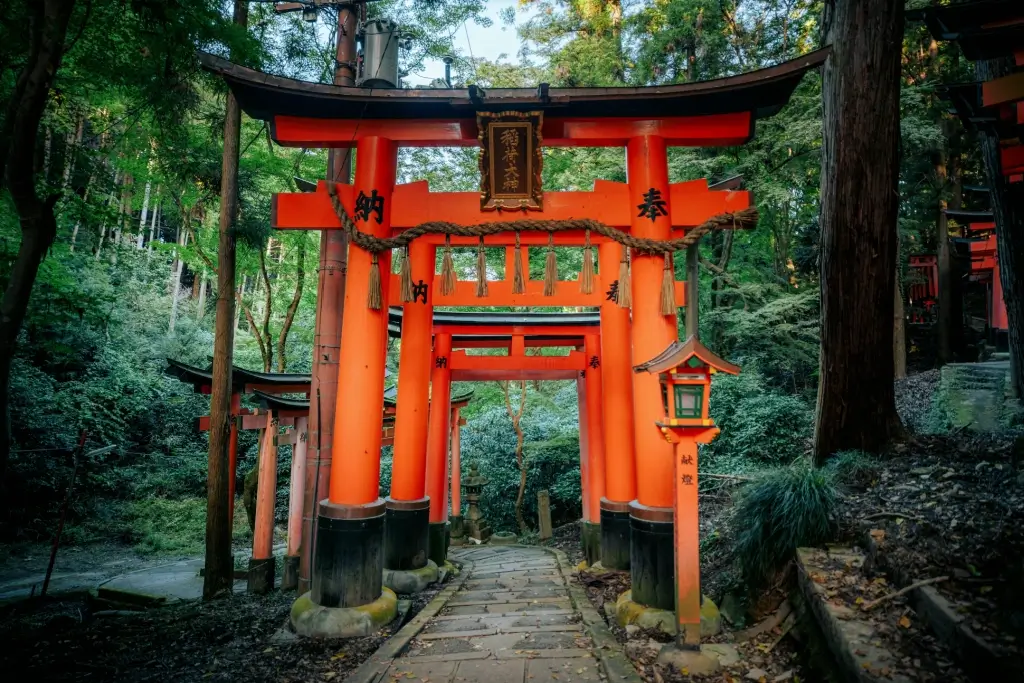
A visit to shrines in Kyoto is often peaceful and reflective. At the entrance to shrines stand torii, traditional Japanese gates said to mark the boundary between the sacred grounds and the human world. Visitors pass through these gates and usually purify their hands and mouth at a water pavilion. They may then offer coins to the shrine, bow, clap twice, and bow again. These customs remind people to enter the space with respect and mindfulness.
Fushimi Inari Taisha
Fushimi Inari Taisha is one of Kyoto’s most iconic shrines, widely recognized for its thousands of bright red torii stretching along mountain trails! Dedicated to Inari, the kami of rice, prosperity, and commerce, the shrine is visited by students, shop owners, and travelers who wish for success in their endeavors. Fox statues are found throughout the grounds and are linked to Inari as the deity’s messengers. Some statues hold keys in their mouths, symbolizing the keys to rice storehouses.
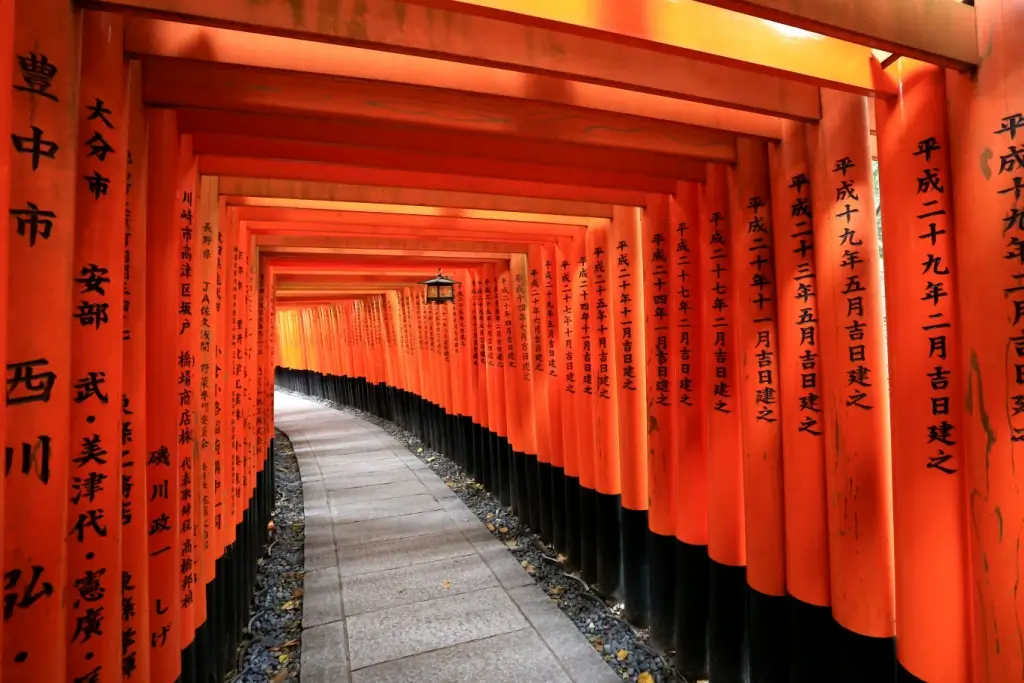
Although the main buildings are near the entrance, many visitors choose to hike the long path through the torii tunnels. The walk offers views of the city and a closer look at small shrines on the mountainside. For many travelers, this location is the most vivid example of the relationship between nature and spirituality among Kyoto shrines!
Are you looking for great snacks to enjoy after a day of visiting shrines? Check out Sakuraco! Sakuraco sends traditional Japanese snacks, teas, and sweets from local makers straight to your door each month!

Yasaka Shrine
Located near the famous Gion district, Yasaka Shrine has stood for more than a thousand years. It enshrines Susanoo-no-Mikoto, a powerful kami associated with protection against illness and misfortune, alongside his wife and eight children. Because of this, the shrine has long been a place where people pray for health and safety.
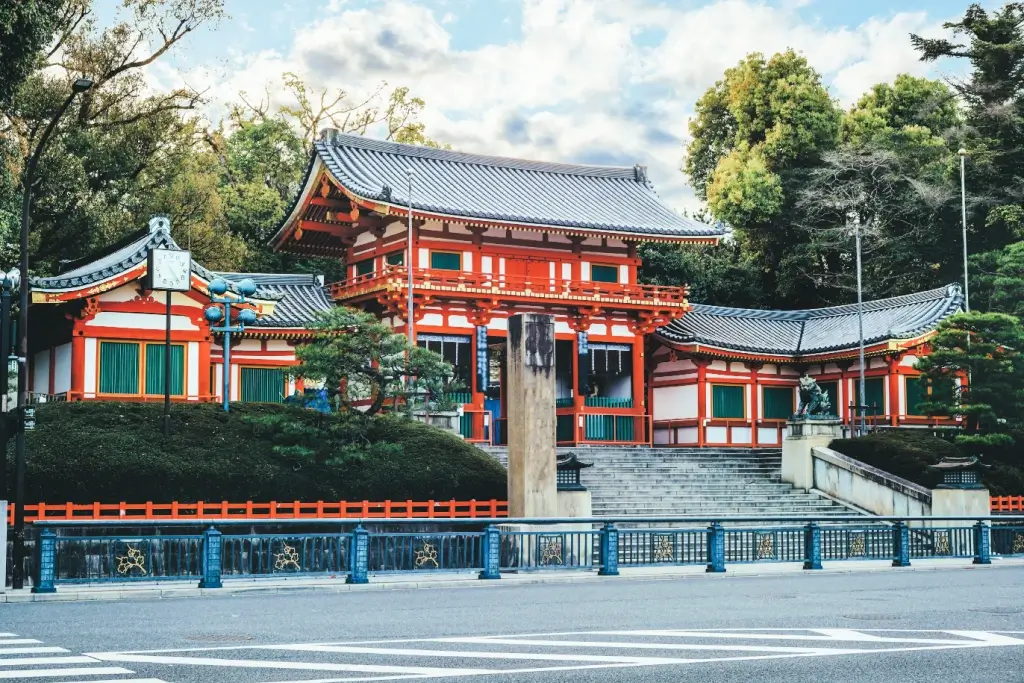
Yasaka Shrine is also the center of Gion Matsuri, one of Japan’s most celebrated festivals. Each July, Kyoto’s streets fill with enormous floats, music, and crowds of visitors. While the festival is spectacular, the shrine itself has a calm atmosphere during other seasons. Lanterns hang from the central stage, glowing softly at night and giving the area a warm presence!
Seimei Shrine
Seimei Shrine in Kamigyo Ward draws many visitors for its unique history. It is dedicated not to a god, but a historical figure: Abe no Seimei. Seimei was a famous onmyōji, or a master of divination based on yin and yang, during the Heian period. Said to be an outstanding onmyōji, stories of his feats include predicting the future and exorcising demons.
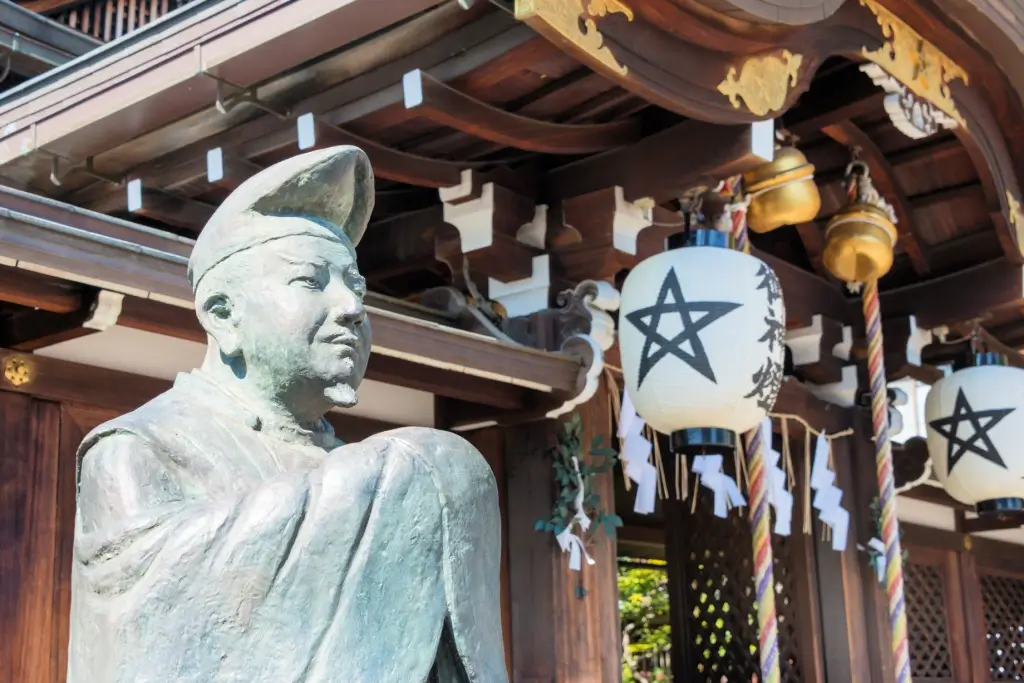
The shrine’s symbol is the pentagram, which Seimei used to protect against evil. The grounds include a sacred well, statues of guardian animals, and charms that visitors purchase for safe travels or good fortune. Its atmosphere feels peaceful and grounded. Therefore, this Kyoto shrine perfectly conveys the extent of human capabilities, and how real people can even become sources of spiritual respect!
Kamigamo Shrine
Kamigamo Shrine, also known as Kamowakeikazuchi Shrine, is one of the oldest Shinto shrines in Japan. It’s also part of the UNESCO World Heritage Site “Historic Monuments of Ancient Kyoto”! The Kyoto shrine is dedicated to Kamo Wakeikazuchi no Okami, a powerful kami associated with thunder, protection from natural disasters, and good fortune. The shrine sits north of the city along the Kamo River and is surrounded by wide lawns and forested paths.
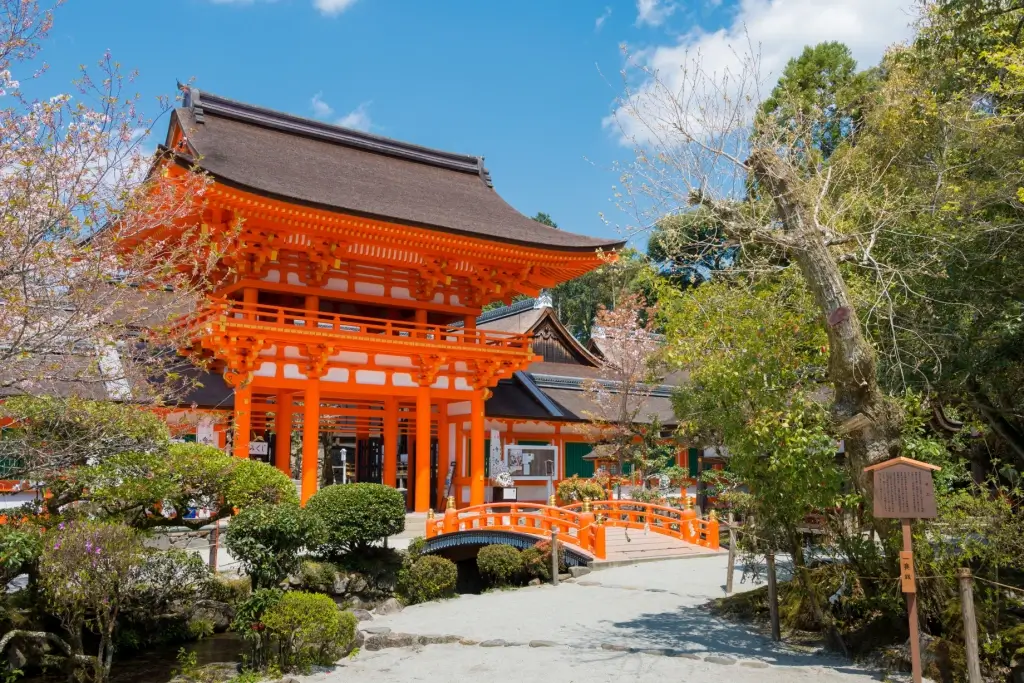
Visitors often come to pray for protection from accidents, renewed energy, success in new beginnings, and overall well-being. Families also come seeking safety and harmony in their daily lives. You can also admire the historical architecture and the great care taken to preserve it for future generations!
Shimogamo Shrine
Shimogamo Shrine lies close to Kamigamo Shrine and is also part of the pair known as the Kamo shrines. Its official name is Kamo Mioya Shrine, and it is dedicated to deities associated with guidance, protection, and family harmony. What makes it special is the surrounding forest, Tadasu no Mori, which translates roughly to “Forest of Purification.”
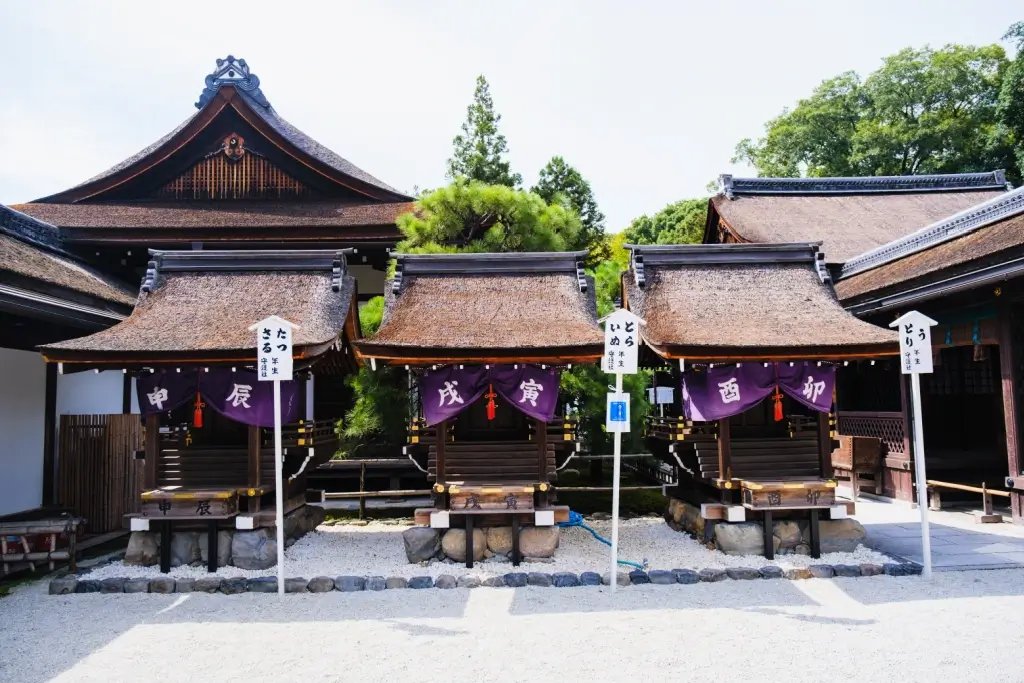
The forest seems suspended in time, its diverse ecosystem of trees carrying the ancient city’s scenery. This shrine is dedicated to festivals associated with purification and renewal. Its bridges, wooded pathways, and bright red structures show how Kyoto shrines can blend natural scenery with traditional architecture!
Which shrine should I go to?
Choosing among the many Kyoto shrines can feel challenging because each one honors a different deity with a distinct role. Some kami are known for bringing success in business or academics, while others are connected to protection, health, creativity, or safe travel. If you have a specific wish, you can search for shrines dedicated to deities associated with that wish.
If you do not have a particular wish, you can explore shrines located near the places you plan to visit in Kyoto. Each site offers its own stories, rituals, and atmosphere. No matter which shrine you choose, you will surely experience a tradition that has shaped Kyoto for more than a thousand years! Have you visited a shrine before? How was the experience? Let us know in the comments!