


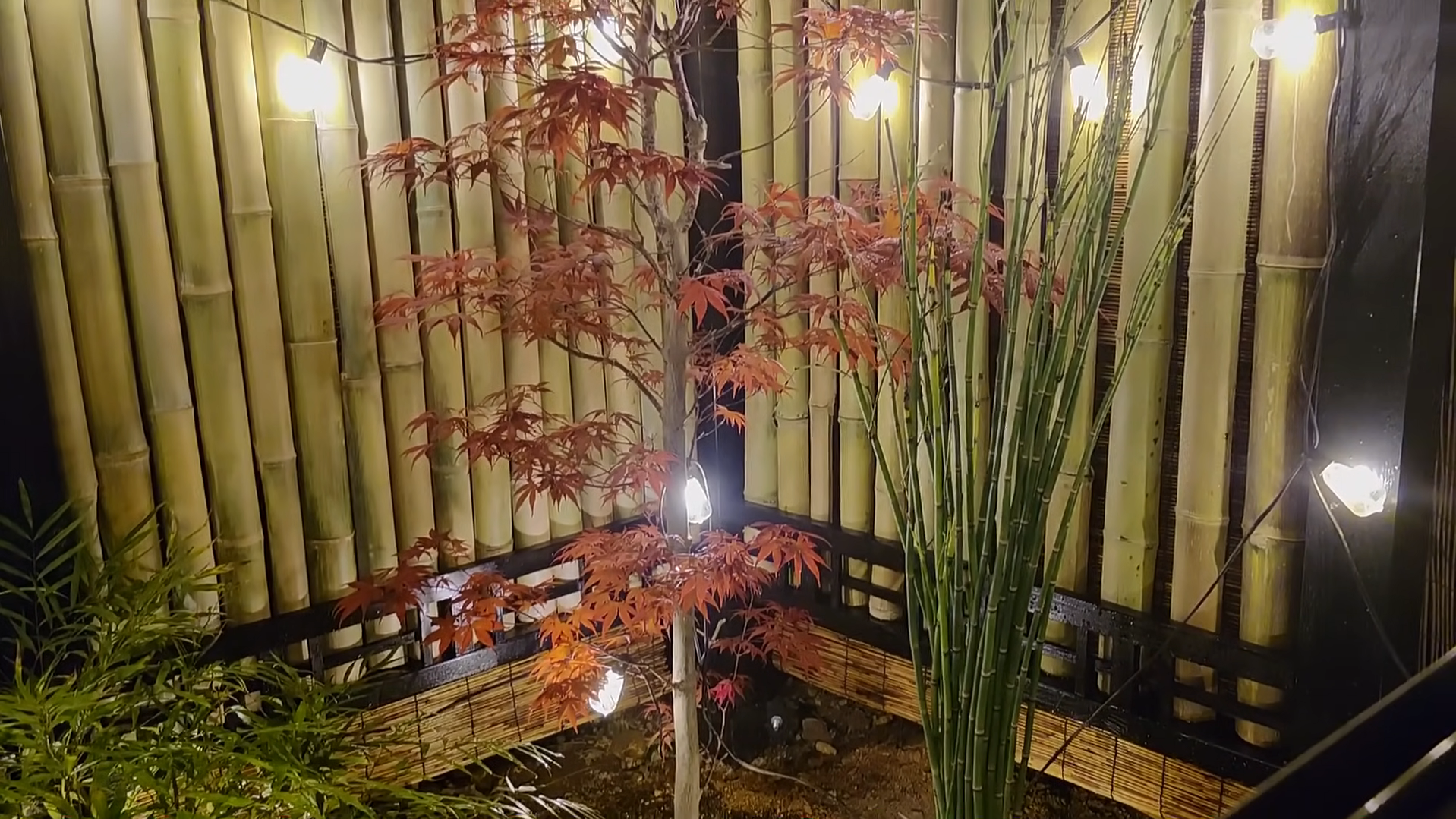
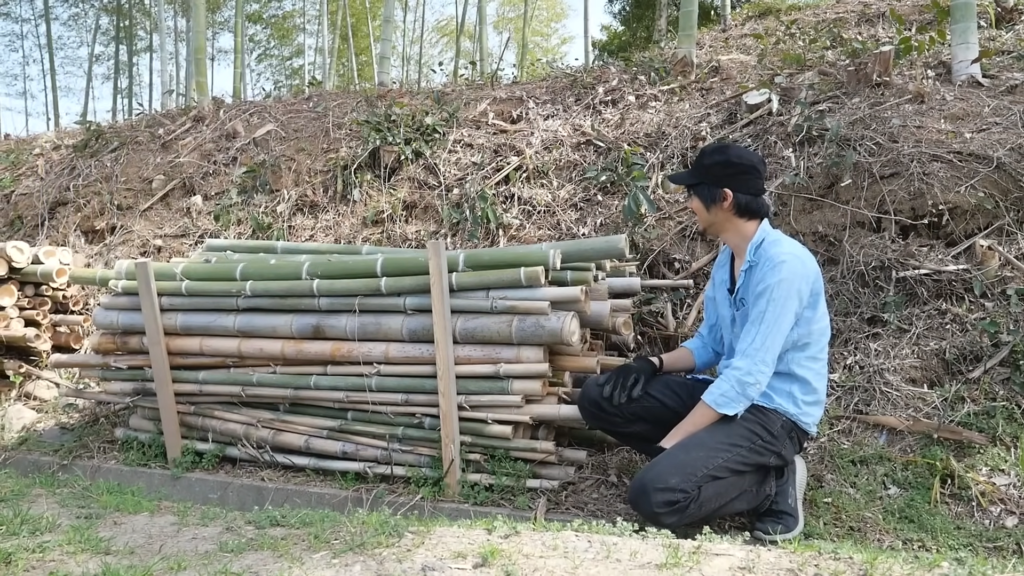
Rachel and Jun are back with another home project, and this time they’re building a Japanese bamboo garden fence. After finding someone who wanted to get rid of extra bamboo, they suddenly had more bamboo than they knew what to do with. In this video, Rachel turns the free bamboo into a beautiful privacy fence for their backyard. It’s a big DIY project, but they break it down step by step so you can see how everything comes together. By the end, the space transforms into a cozy garden that feels calm and private.
Why They Needed a Bamboo Fence
Rachel originally made a small outdoor bath space for Jun as a birthday gift. It had lights and a small garden area for privacy. But over time, things shifted, and the space needed some improvements. A bamboo fence was the perfect solution. It would add privacy while keeping the natural Japanese garden style they wanted. They also planned to plant trees and plants to make the area feel like a small hidden garden.
Preparing the Bamboo
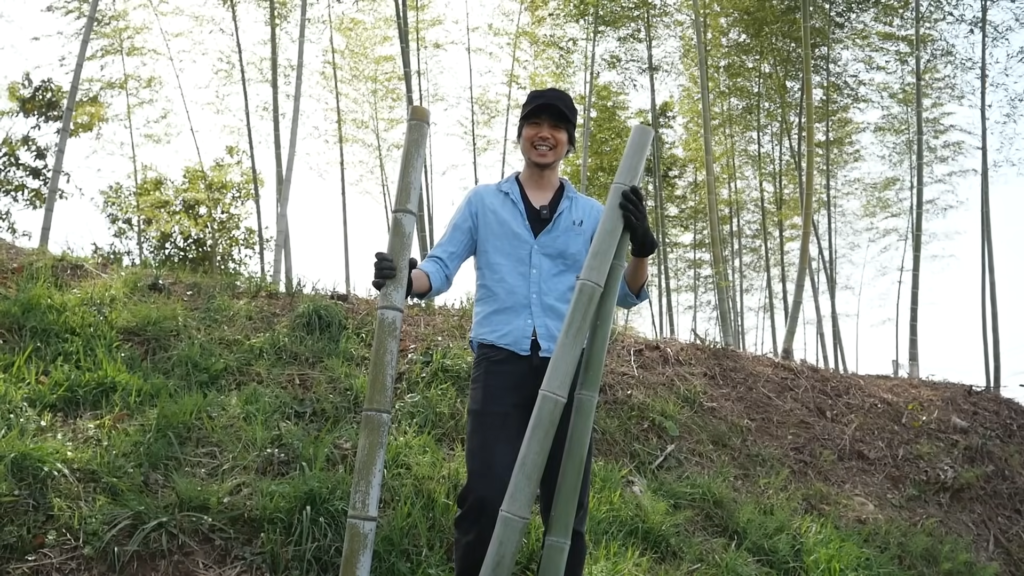
The first step was preparing the bamboo. Fresh bamboo is heavy and green, but it slowly dries and turns yellow over time. Because of the weight, the fence frame needed to be strong enough to support it. Jun cut the bamboo into the right lengths, while Rachel worked on the wooden frame that would hold everything together.
Some of the bamboo pieces were also split in half using a traditional Japanese method. This makes the bamboo easier to attach to the fence panels. They also noticed a white oil on the surface of the bamboo. This is natural and common with fresh bamboo. Later, Rachel cleaned some of it using an alkaline solution.
Building the Fence Panels
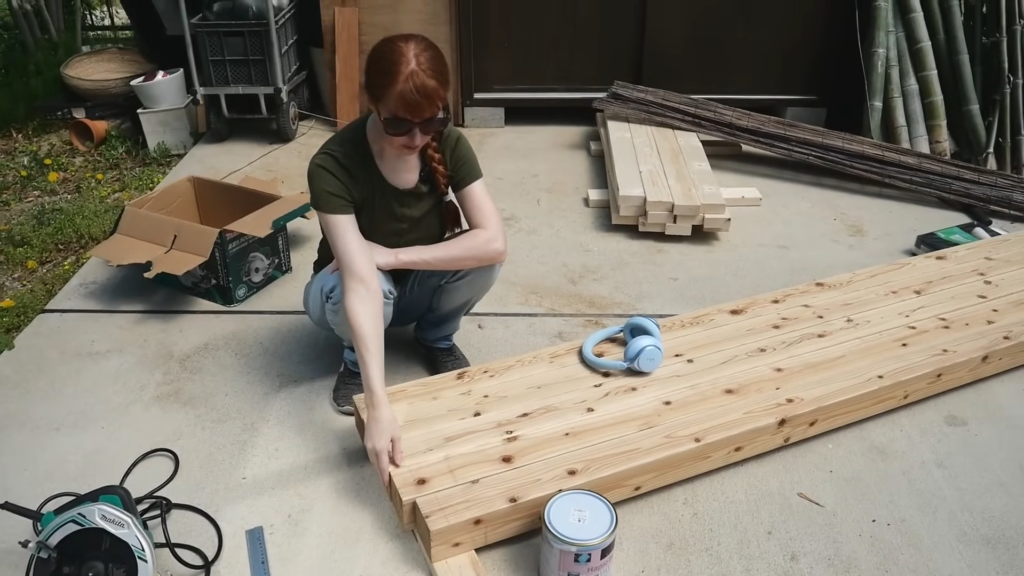
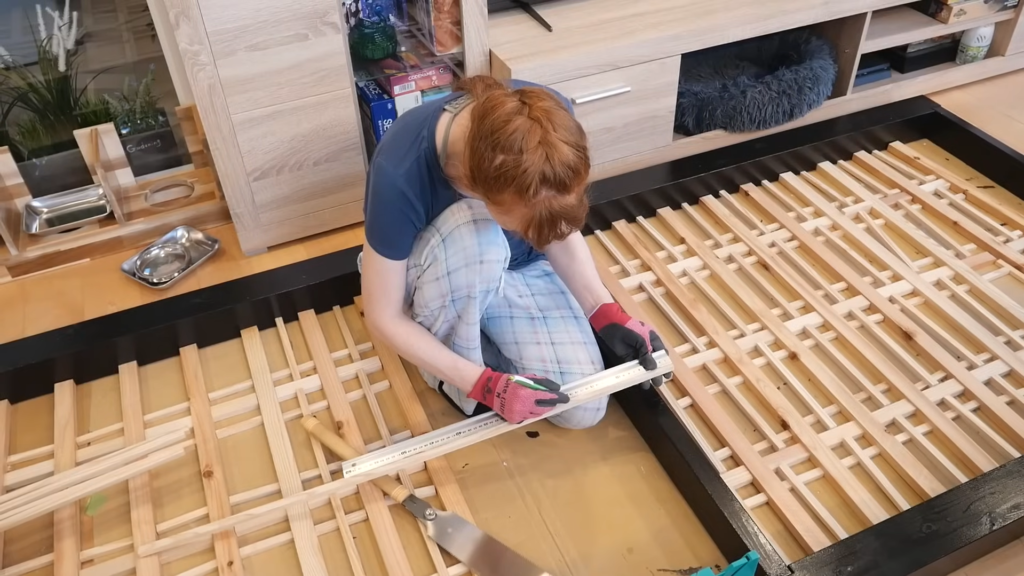
To make installation easier, Rachel built the fence in panels. She started by making wooden frames and then attaching bamboo pieces across them. While working on the design, she realized one part of the frame didn’t look very good. Instead of ignoring it, she redesigned the frame to look more like a traditional Japanese screen pattern. It meant more work, but the final design looked much better. After assembling the frames, Rachel painted them black. Painting took hours, and she even stayed up until 3 a.m. finishing the first coat.
Installing the Fence
Once the panels were ready, it was time to install them. Rachel and Jun borrowed a concrete breaker from a neighbor to dig holes for the fence posts. Their friend Grace also joined to help with the heavy work. Getting the posts perfectly level took several tries. Like most construction projects, they had to adjust things multiple times before everything lined up correctly. After the posts were secured, they started attaching the bamboo panels. Slowly, the fence began to take shape.
Adding Plants and Garden Details
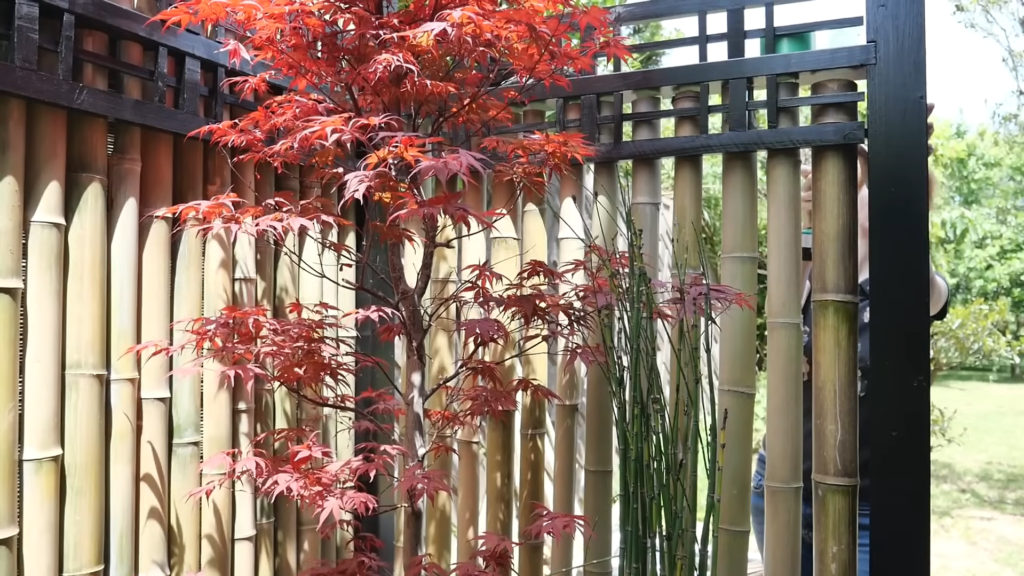
After finishing the fence, they worked on the garden. Jun improved the soil by mixing compost and nutrients so the new plants could grow better. They planted several trees and plants around the fence to create a layered garden look. One plant produces small red berries, which adds color to the space. They also planted a Japanese maple and other plants that grow well in shaded areas. For the newly planted trees, Jun built small soil rings around the base. This helps water stay near the roots so the trees can absorb it more easily.
Extra Privacy with Sudare
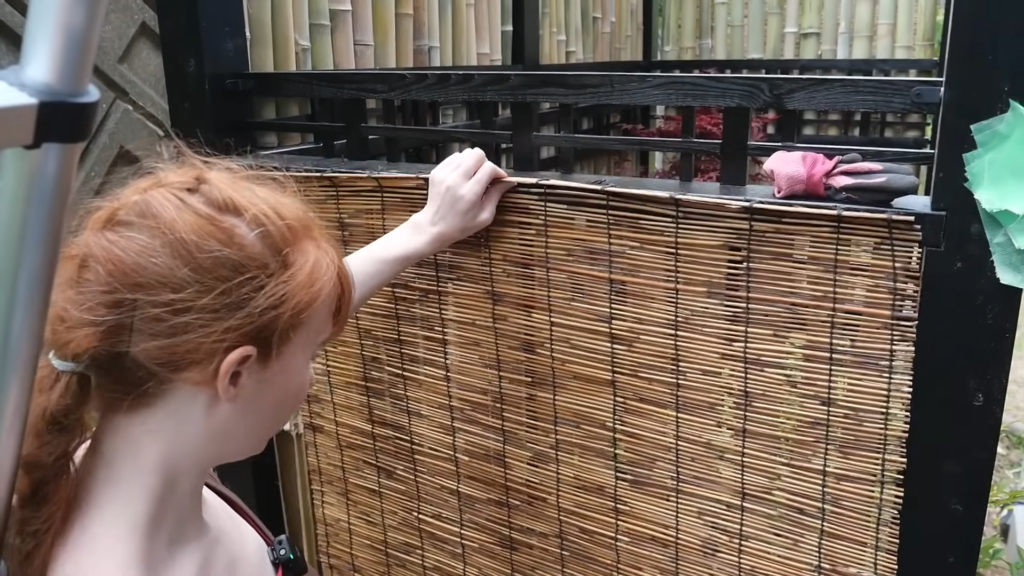
To add more privacy, Rachel installed sudare, which are traditional Japanese bamboo blinds. These are commonly used in Japan during spring and summer because they block sunlight while still allowing airflow. The sudare were attached to the fence panels and can easily be replaced when needed. They also added lights around the garden to complete the relaxing outdoor bath area.

A Snack Break with Sakuraco
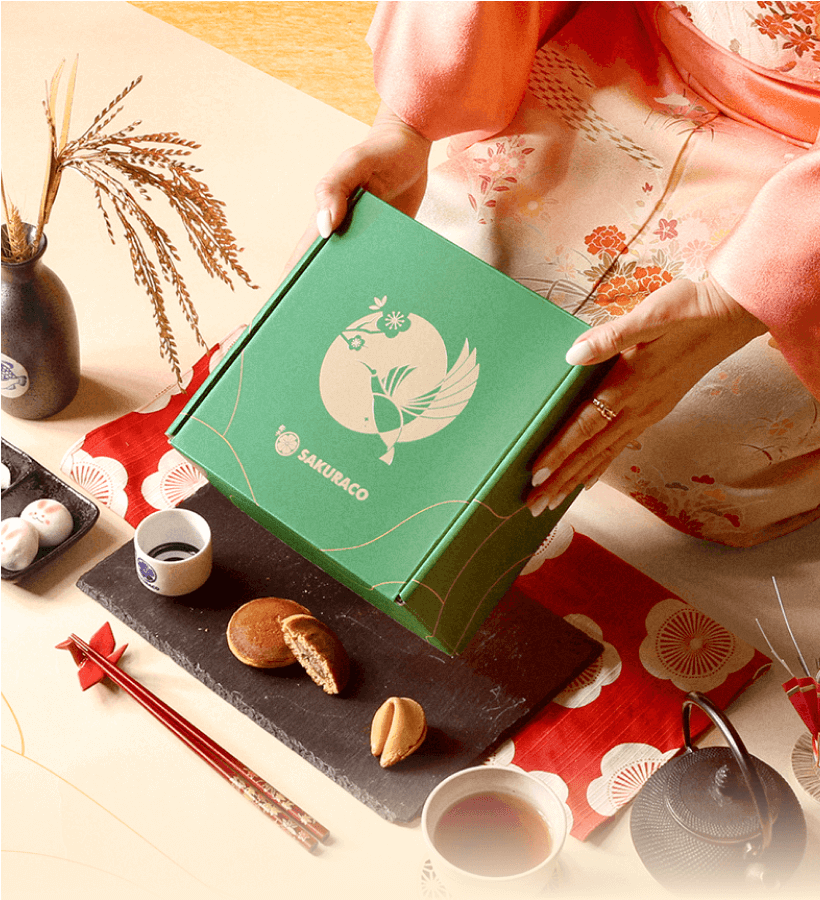
During the project, Rachel also takes a break to try snacks from Sakuraco, a monthly Japanese snack subscription box. Each Sakuraco box features traditional Japanese snacks from local makers. The theme of this box is inspired by Osaka, so it includes regional treats, Japanese tea, and a small cultural item.
Every box also includes a booklet that explains the snacks, ingredients, and the story behind the makers. It’s a fun way to try authentic Japanese snacks at home. If you’re interested in trying it yourself, you can get $5 off your first Sakuraco box using the code in the video description.
👉 Use code RACHELJUN to get $5 off your first Sakuraco box here.
The Finished Garden
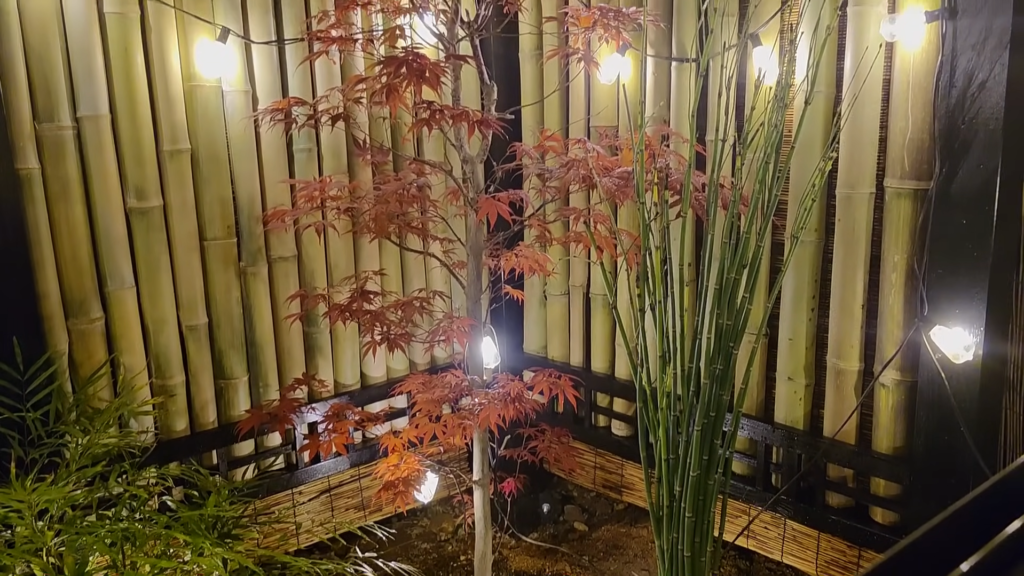
After weeks of cutting bamboo, painting frames, installing posts, and planting trees, the garden is finally complete. The bamboo fence now gives the space more privacy and a natural Japanese garden look. With the lights on and the plants growing around it, the area feels calm and cozy again. Now Jun can enjoy relaxing baths in the outdoor garden just like Rachel originally planned.
👉 Watch the full video on Rachel and Jun’s YouTube channel to see the entire bamboo fence project here.