


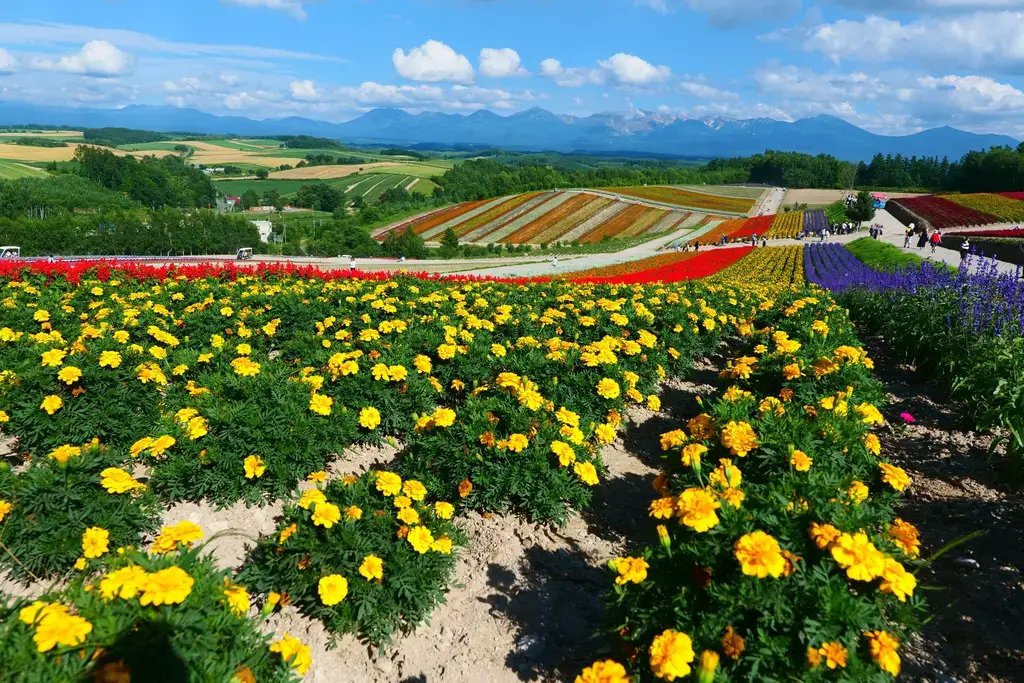
The town of Biei in Hokkaido has attracted visitors to its rolling hills and colorful fields for over 200 years. The region’s rural beauty is famous across the country. The local scenery has been used in everything from advertisements to award-winning photos. This small town is also a major gateway to other outdoor attractions in Hokkaido, such as lavender farms and hiking trails. Let’s learn about this tiny town and its role as a hub to Hokkaido’s outdoors.
Where is Biei?
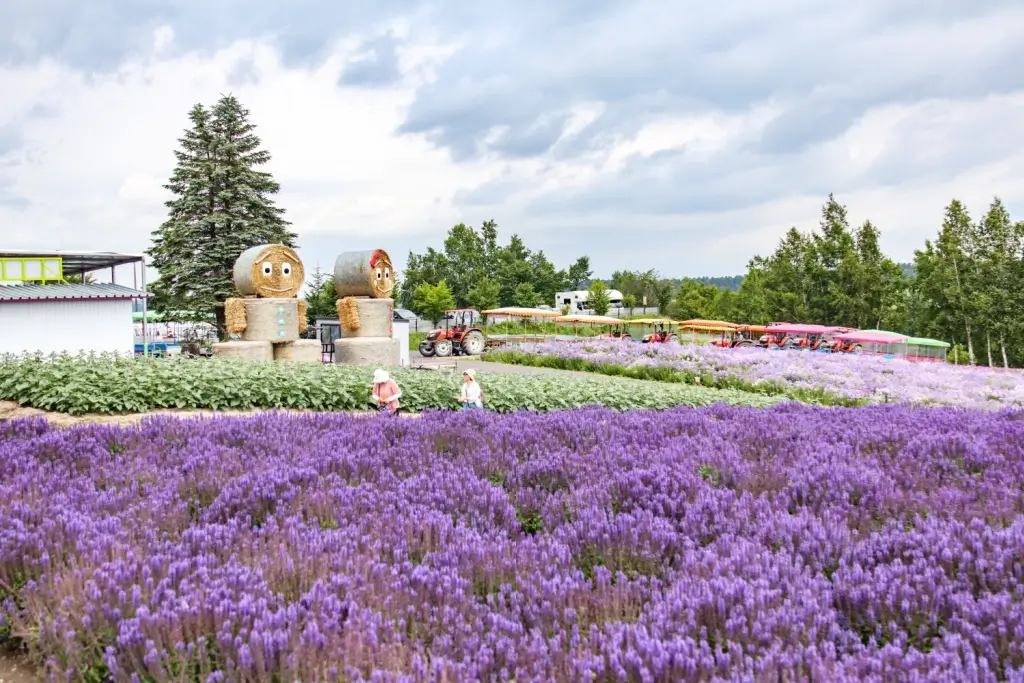
Biei (美瑛) is a peaceful rural town of less than 10,000 people in central Hokkaido’s Kamikawa District. It is nestled between the cities of Asahikawa and Furano in Kamikawa, at the foot of the Tokachidake mountain range. The area’s economy focuses mainly on agriculture and tourism. The town is also celebrated for its picturesque countryside scenery, which is made up of rolling hills and open fields. During summer, flower fields like Shikisai no Oka bloom with sunflowers, tulips, and lavender.
What is the history of Biei?
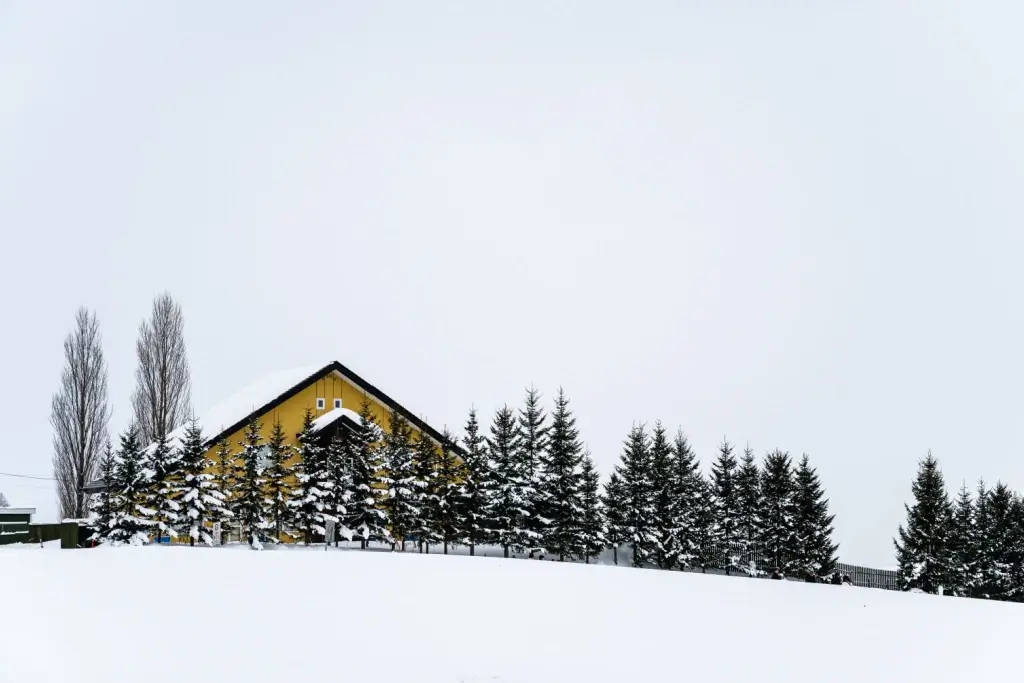
Biei’s story begins with Hokkaido’s native Ainu inhabitants, whose culture revolved around using the land for hunting. Their name for the area, “Biyoro-pet”, which means “shining river”, is where the modern name for the area originated. Its geography was shaped by ancient volcanic ash from nearby Mount Tokachi, which created rich, volcanic soils. Settlers from outside the island arrived in the late 1800s and began farming the fertile land. Local shrines reflect these settler roots, like Biei-jinja, which dates back to 1896.
A railway station opened in 1899 to better connect the town to the outside world. This helped increase the region’s population and improve its economy. In the 1970s, photographer Shinzo Maeda captured images of the surrounding hills and fields. His photographs became famous as iconic examples of the Japanese countryside. These drew the first visitors, boosted local farming, and sparked interest in the town as a tourism destination.
Exploring Biei
Visitors usually begin exploring the town by bicycle, car, or on guided tours from Biei Station, which is located on the Furano line. It can be reached by JR train from Asahikawa in about 30 minutes. The two most popular areas, Patchwork Road and Panorama Road, are accessible year-round. Patchwork Road sits northwest of the town center and takes its name from the patchwork of fields visible from high points such as Hokusei Hill Observatory.
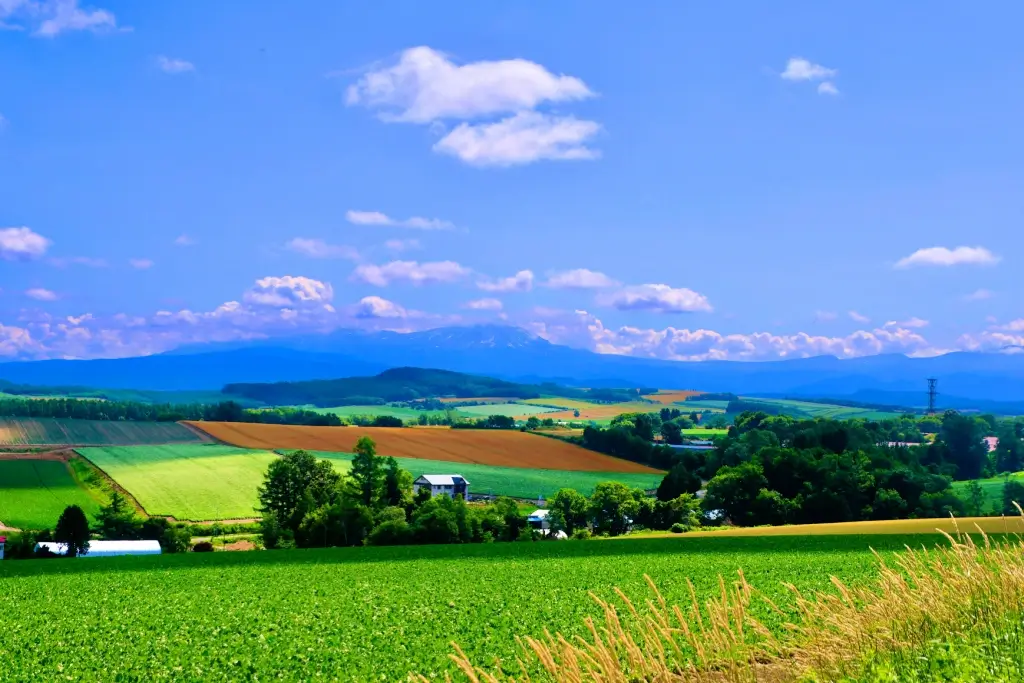
It also features several famous trees from ads, such as the Seven Stars Tree. Takushinkan Gallery displays some of the area’s most famous photos of its landscape. Panorama Road lies to the south and offers similar views with added flower parks. Its Shikisai Hill is perfect for viewing lavender and other summer blooms. Winter brings snowshoe opportunities in the surrounding fields.
Nearby Popular Attractions
Biei’s central placement near major transport links makes it a great gateway for visiting nearby outdoor attractions via its scenic roads:
Blue Pond
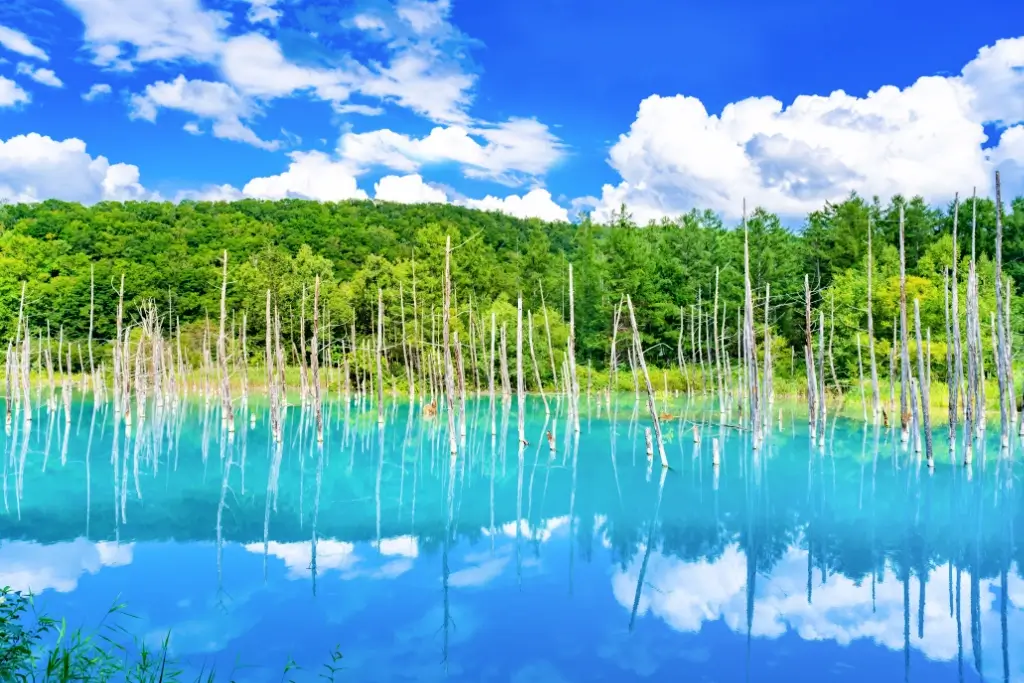
Blue Pond is accessible via a 20-minute drive east from town, or a bus ride from the station. It attracts crowds with its striking turquoise waters that shift hues with the time of day and seasons. Because the water contains aluminum oxide from nearby hot springs, it creates the vivid color. It was discovered after a dam project in 1988 and made famous through its use as Apple’s wallpaper in 2012.
Shirahige Waterfall
Shirahige Waterfall is a short 5-minute walk from Shirogane Onsen, or about 25 minutes by car from the town center. It is fed by mineral-rich hot springs and is also famous for its milky blue appearance. Its flowing streams have earned it its name, which means “white beard,” and it cascades dramatically into the Biei River, inspiring local folklore as a natural wonder.
Shikisai no Oka
Shikisai no Oka enchants visitors with its vast, colorful flower fields, home to over 30 varieties. It was established in 1976 as a farm, but has evolved into a panoramic garden and showcase of Hokkaido’s flora. Tractor rides during spring to autumn blooms are a fun way to experience the scenery. Shikisai no Oka is a 10-minute drive north of the city by car or local bus, and entry is around 500 yen.
Daisetsuzan National Park
Daisetsuzan National Park beckons hikers with Japan’s largest wilderness. It is famed for its alpine flora and wildlife like brown bears. It was founded in 1934 to protect volcanic peaks, and its trails and ropeways offer stunning vistas year-round. Visitors usually enter through Sounkyo or Asahidake, both about a 40-minute drive from Biei.
Visiting Tips for Biei
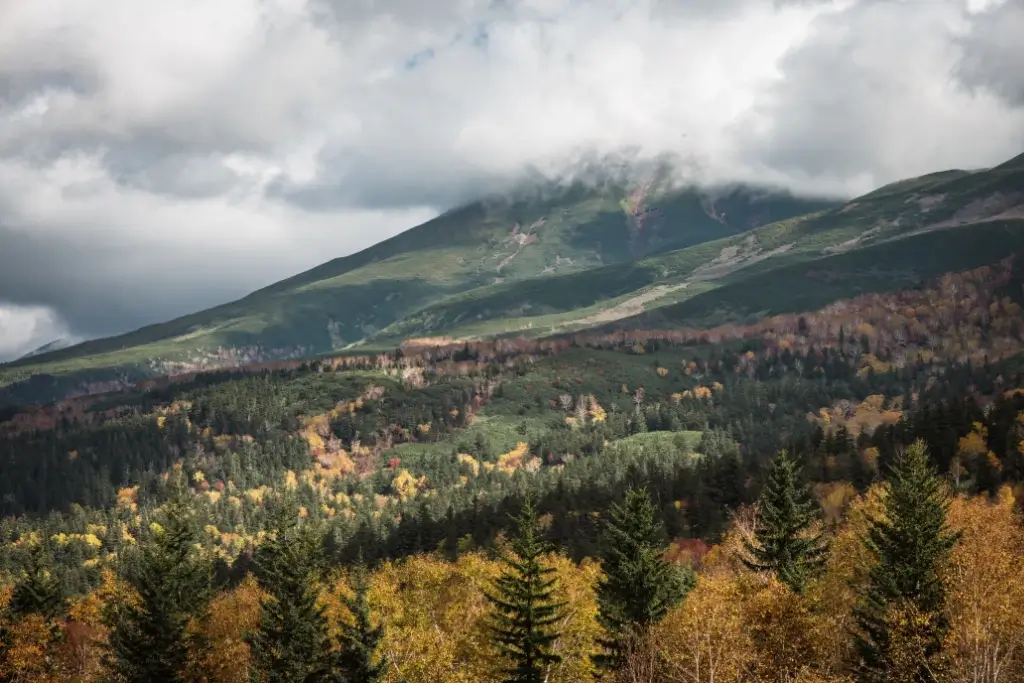
The best times to visit are in summer for flowers or autumn for leaf viewing. Pack layers of clothing, as the weather shifts fast in the hilly landscape. It’s easy to accidentally stumble onto private land in the area, so it’s best to follow paths. Electric bikes and car rentals are available to make travel easier on some longer routes. Preservation efforts to keep old sites intact, using old tools to show daily routines in earlier times, give the visit an authentic, historical perspective to the visit. And the region’s ties to Ainu culture add cultural depth.
Why is Biei important?
Biei is important because it makes access to central Hokkaido’s diverse outdoor attractions simple and easy. Despite being located in the middle of the island, it still lies along major transportation routes. It also makes central Hokkaido’s outdoor spots accessible to a wide range of travelers. Its rural flair does not limit options; train access is convenient, and bicycle and car rentals are readily available.
The town itself embodies the appreciation of the land, from the Ainu’s cultural reverence to modern photography. Besides its fame, local ways like farming still exist, adding a sense of realism to trips. Help others discover this gateway to Hokkaido’s best spots! What nearby attractions have you visited from there? What makes it a great base for you? Share your gateway experiences in the comments.