


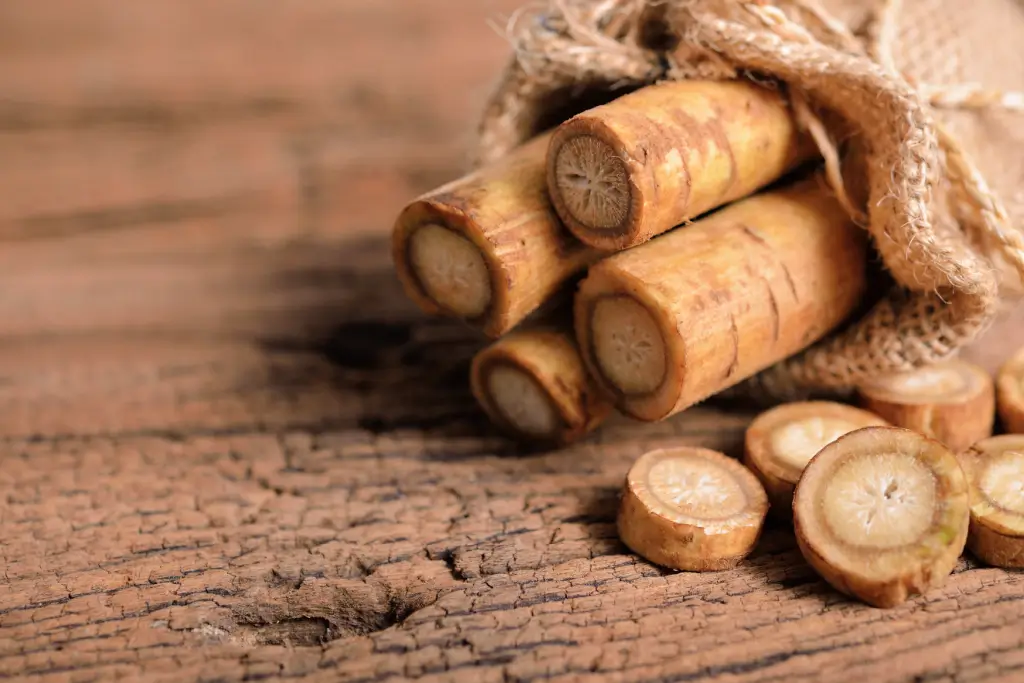
Burdock root is a long, brown root vegetable that appears in many traditional Japanese dishes. Known as gobo in Japan, it has a crunchy texture and a mild, earthy flavor that works well in soups, snacks, and sweets. The root has been used in Japanese cooking for centuries and is also valued for its fiber and nutrients. Many regional dishes highlight burdock in unique ways, showing how adaptable this simple root can be.
Yawatamaki
Yawatamaki is a traditional Japanese dish made by wrapping thin slices of meat or eel around burdock root. The dish is often associated with celebrations and seasonal meals, especially during the New Year period. In many recipes, burdock is simmered first, becoming tender while retaining a firm bite. After that, it is wrapped with meat and cooked in a sweet soy sauce glaze.
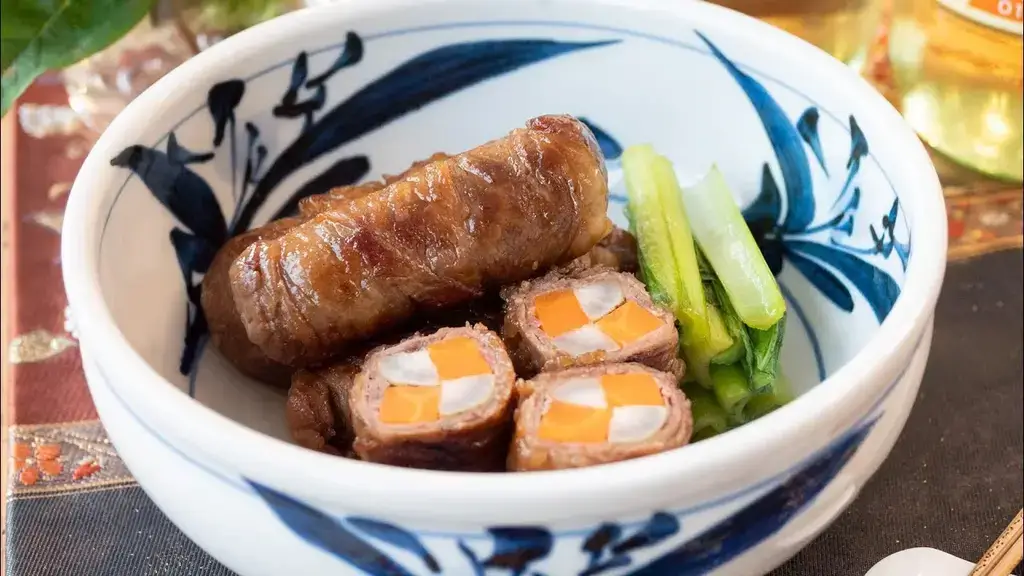
The name “yawatamaki” comes from the city of Yawata in Kyoto, where this dish is believed to have originated. Historically, eel was used in the recipe, but beef or pork is common in modern home cooking. The burdock root gives the dish structure and adds a slightly nutty flavor. Thinly sliced vegetables make the rolls easier to eat and allow the seasoning to penetrate them.
Tataki Gobo
Tataki gobo is a simple dish made with lightly pounded burdock root, seasoned. The word “tataki” means “to pound” or “to strike,” which describes the preparation method. Cooks first boil or steam the burdock until it becomes slightly tender. Then they gently pound the root to break the fibers and help the seasoning absorb. This technique gives the dish both a soft and crunchy texture.
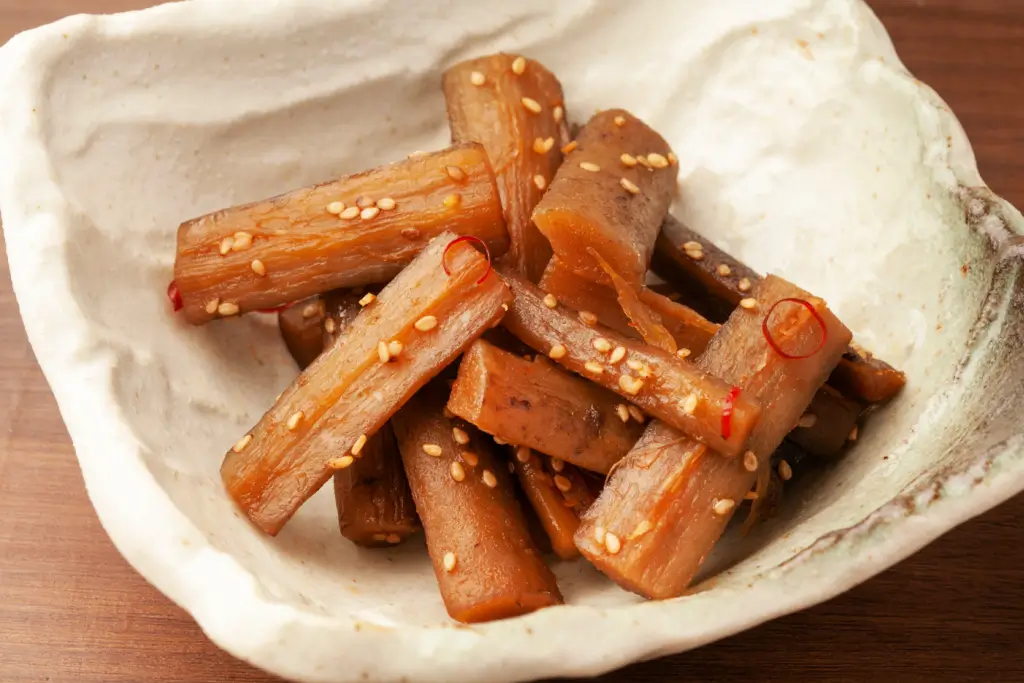
After pounding, the burdock is usually dressed with soy sauce, sesame seeds, and sometimes vinegar or sugar. The sesame adds a nutty aroma that pairs well with the earthy root. Tataki gobo is often served as a small side dish or part of a bento meal. Because the flavors are light, it balances richer foods like fried dishes or grilled meat. It also shows how a simple technique can transform a humble ingredient.
Tonjiru
Tonjiru is a hearty miso soup that includes pork and many vegetables, including burdock root. The soup is thicker and more filling than regular miso soup. Sliced burdock root is added along with ingredients like daikon, carrots, tofu, and potatoes. When simmered in the broth, the burdock adds depth and an earthy taste. Its firm texture also holds up well during cooking.
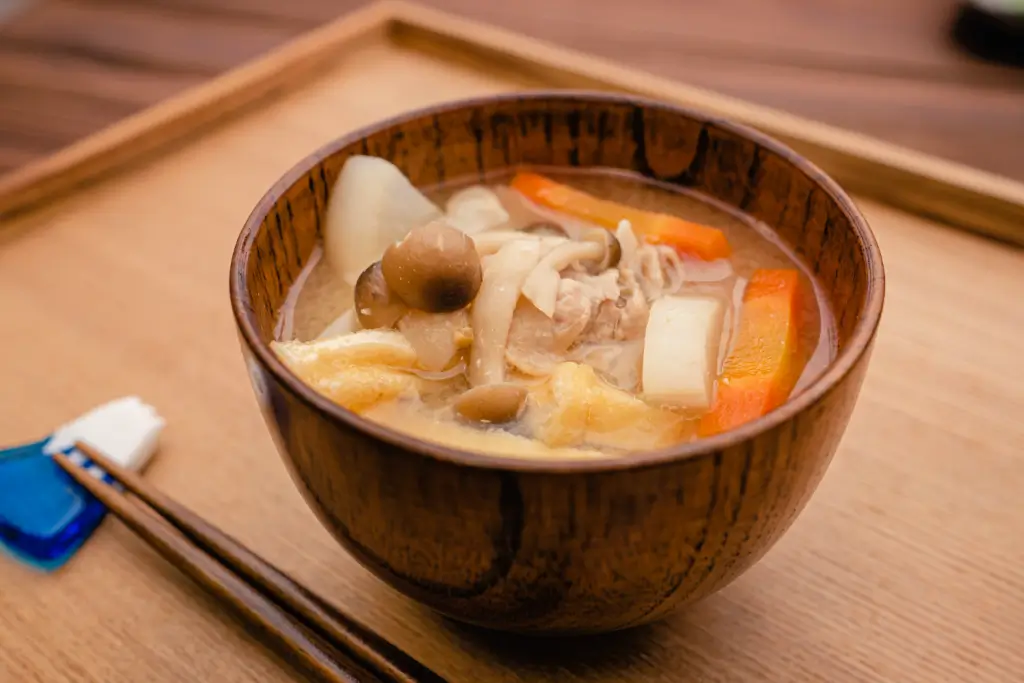
This dish is popular during cold weather because it is warm and satisfying. Many households have their own version, adjusting the vegetables depending on what is available. Burdock root is a key ingredient because it adds both flavor and texture to the soup. The root also absorbs the miso broth, making each bite rich and savory. Tonjiru is a good example of how burdock can strengthen the flavor of a simple soup.
Are you looking for interesting snacks? Check out Sakuraco! Sakuraco sends traditional Japanese snacks, teas, and sweets from local makers straight to your door each month!

Goboten
Goboten is a type of tempura made from burdock root. The root is cut into thin strips or sticks, then coated in batter and deep-fried. Frying gives the burdock a crisp outside while keeping the inside slightly chewy. The root’s natural flavor becomes stronger when it is fried. Many people enjoy goboten as a snack or as a topping for noodle dishes.
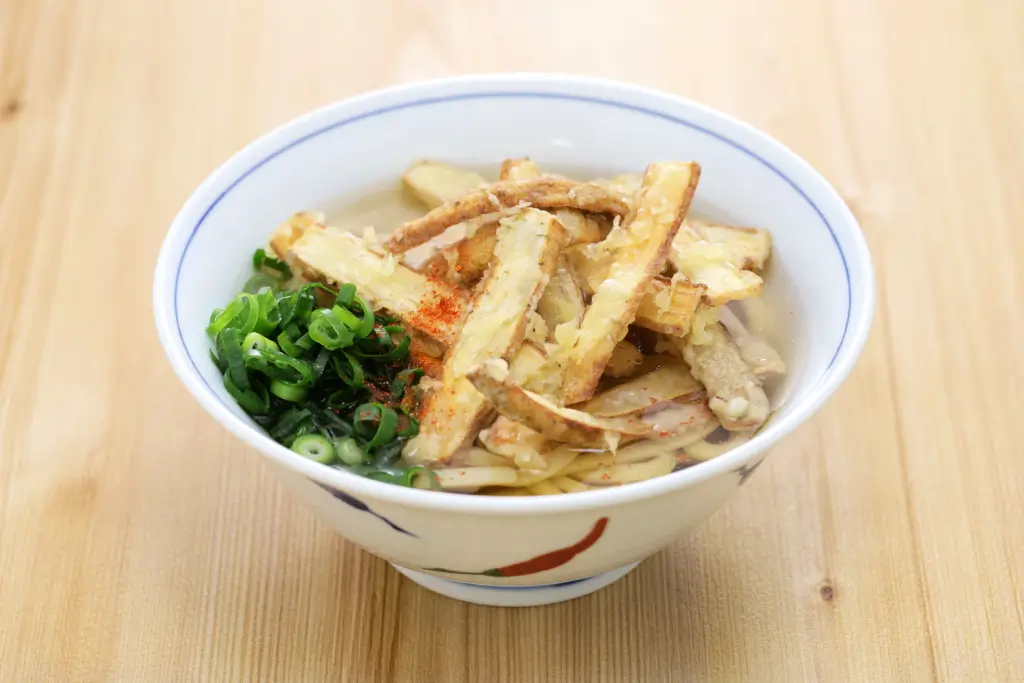
In some regions, goboten is especially common in udon or soba shops. The crispy strips are placed on top of hot noodles, where they slowly soften in the broth. This mix of crunchy and soft textures makes the dish interesting to eat. Some recipes season the batter with a little salt or soy sauce. Even with simple seasoning, goboten highlights the natural flavor of burdock root.
Hanabira Mochi
Hanabira mochi is a traditional Japanese sweet that also includes burdock root. The name means “petal mochi,” referring to its soft, folded shape. Inside the mochi is sweet white miso paste and a thin strip of burdock root. Burdock is usually cooked in sugar, making it soft and slightly sweet. This combination of sweet paste and mild burdock creates a balanced flavor.
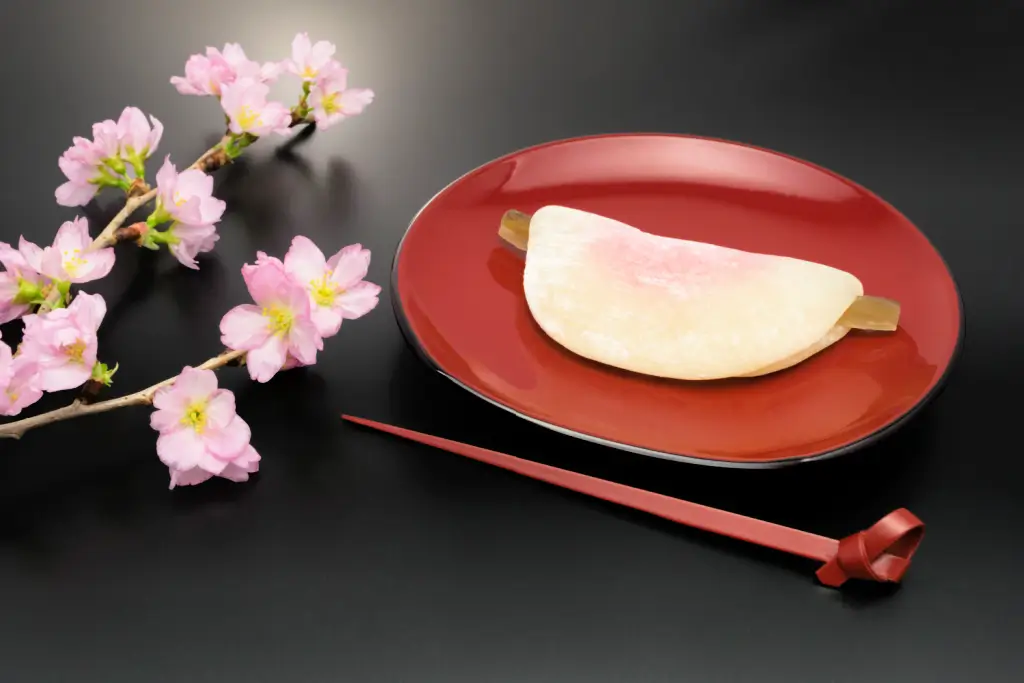
This wagashi is closely connected to New Year celebrations in Japan. The sweet has a long history and was once served at the Imperial Court. Today, it is commonly sold in wagashi shops during the New Year season. The burdock root symbolizes strength and longevity because it grows deep in the ground. Even in a dessert, burdock adds texture and meaning.
Why should I try these burdock dishes?
Trying dishes made with burdock root is a good way to experience traditional Japanese cooking. Each dish uses a different technique that changes the flavor and texture of the root. For example, frying makes burdock crispy, while simmering makes it tender. These variations show how flexible the ingredient can be in the kitchen. Even simple preparations reveal new sides of its flavor.
Burdock root also connects many dishes to seasonal traditions and regional cooking styles. Some recipes appear during holidays, while others are everyday comfort foods. By trying these dishes, you can see how one ingredient plays many roles in Japanese cuisine. The root’s crunchy texture and earthy taste make it stand out from other vegetables. Exploring burdock dishes can help you understand the variety within Japanese food.
From savory rolls like yawatamaki to crispy goboten tempura, each recipe highlights a different side of the root. Soups like tonjiru show how burdock adds depth to warm comfort food, while tataki gobo demonstrates a lighter preparation. Even sweets like hanabira mochi include burdock to create unique textures and symbolism. Have you ever tried any of these burdock root dishes? Which ones do you like? Let us know in the comments below!