


Japanese desserts, through combining traditional methods and ingredients with modern styles, have become globally recognizable. The history behind these sweets also reveals certain aspects of Japanese culture. From mochi to fluffy soufflé pancakes, let’s learn more about the key ingredients and methods that are unique to Japan!
Japanese Traditional Sweets (Wagashi)
Traditional Japanese desserts, also known as wagashi (和菓子), have a long and rich history intertwined with Japanese culture. They are typically made using plant-based, seasonal ingredients. This is in contrast to Western-style desserts, which often use dairy and other animal products, as wagashi utilizes methods and ingredients that predate Western influence in Japan. This results in a one-of-a-kind taste, vastly different from that of cakes, breads, and pastries made with European methods.
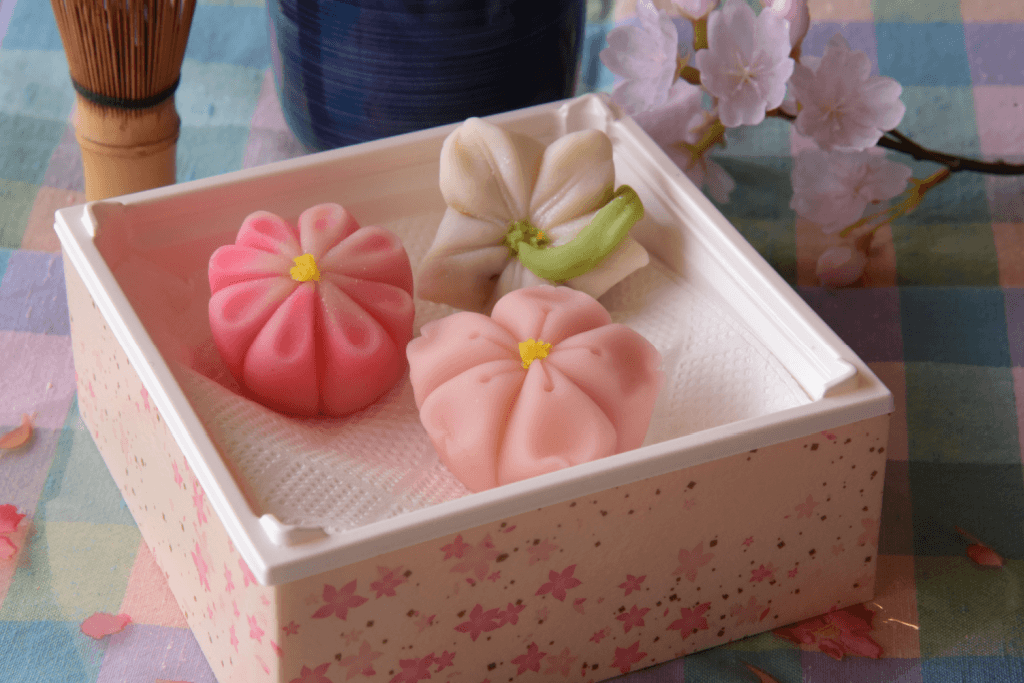
Wagashi developed rapidly in the Edo period (1603–1868), during which most of today’s well-loved desserts were crafted. One example is nerikiri (練り切り), made by kneading together sweetened white bean paste, gyuhi (a variety of rice cake), yams, and other ingredients. Nerikiri comes in all shapes, designs, and flavors, often based on seasonal flowers. For example, during spring, one can often find pink, cherry blossom-shaped nerikiri.
This is true of many other wagashi, the significance of seasonal motifs in Japanese culture shining through. Wagashi is also deeply intertwined with the tradition of the tea ceremony, in which they are traditionally served alongside matcha to balance the bitterness. Ingredients traditionally used in wagashi serve as the foundation of many Japanese sweets, even today!
Key Ingredients
Anko
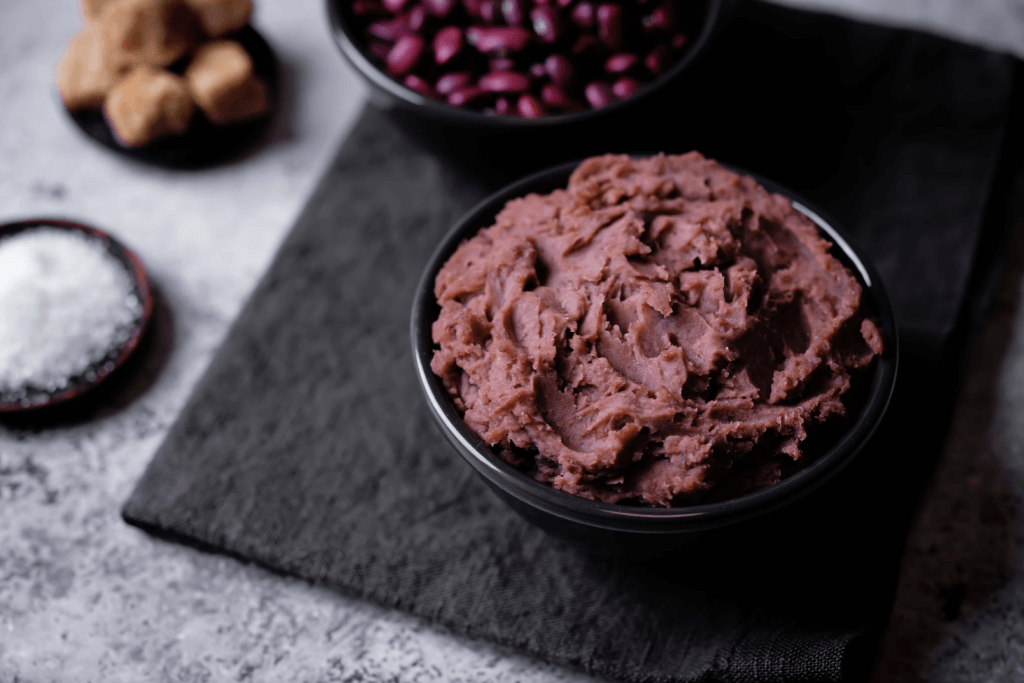
Anko (餡子), referring to red bean paste, has been a central ingredient in many Japanese desserts for centuries. It is a staple in both wagashi and modern desserts. The paste is made by boiling and often sweetening red azuki beans, though there are various ways in which it can be prepared. The most common type is koshian (漉し餡), which separates the mashed beans from the skins by pushing them through a sieve. Many Japanese desserts use anko as a filling, such as in dorayaki, which consists of anko sandwiched between two small, pancake-like, castella patties.
Mochi
Another staple of Japanese cuisine is mochi, which refers to rice cake made from glutinous rice, occasionally including water, sugar, or cornstarch. Mochi is made by pounding steamed rice into a paste, then molding it into a desired shape. This is traditionally done around New Year’s, in a ceremony called mochitsuki (餅搗き). As mochi culturally represents strength, health, and a long life, eating mochi around New Year’s is believed to bring good luck.
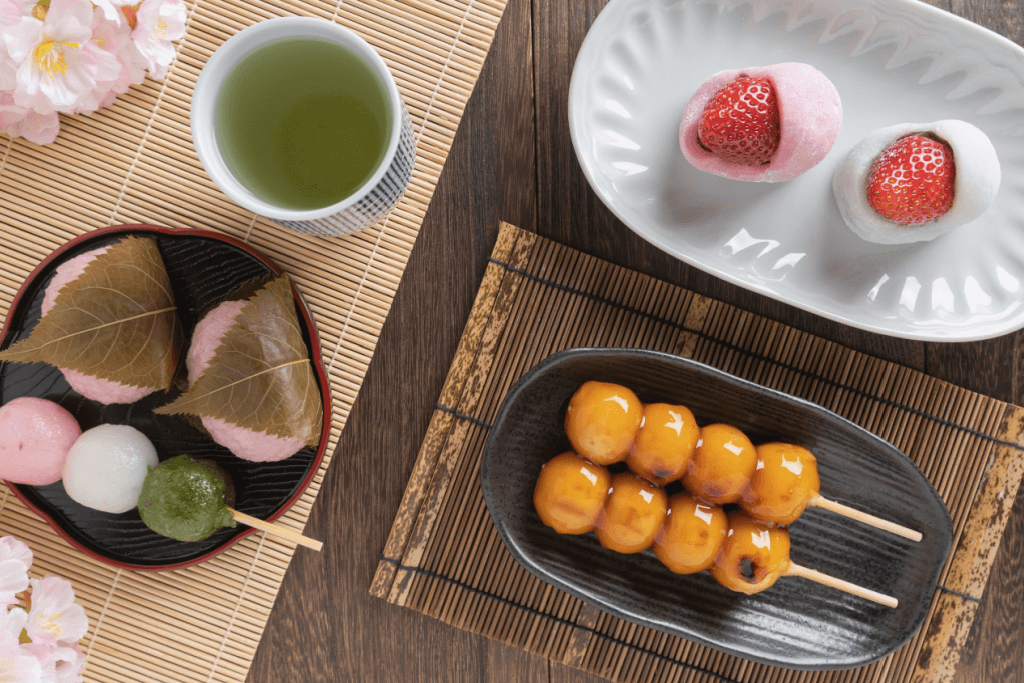
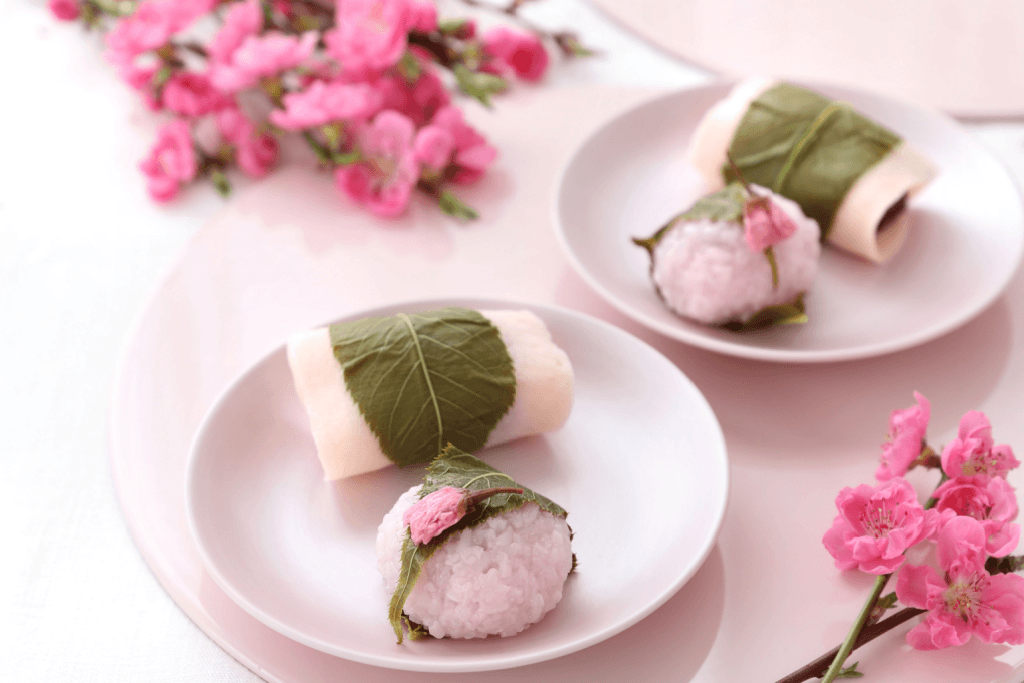
In desserts, mochi is often wrapped around a filling, such as sweet bean paste or ice cream. With a light, neutral flavor, mochi pairs well with a variety of ingredients. One seasonal variety of mochi is sakuramochi, which signifies the beginning of spring and the cherry blossom (sakura) season. Sakuramochi consists of sweet, pink-colored mochi with anko filling wrapped in a pickled cherry blossom leaf.
Other Common Ingredients
Though anko and mochi are commonly used ingredients in Japanese-style desserts, there are many others. One of these is kanten / agar-agar (寒天), a gelatin-like ingredient derived from seaweed, high in fiber and low in calories. Kanten is often used in desserts such as Yokan, a sweet, jelly-like snack. Roasted soybean flour, kinako (黄粉), is another popular ingredient, used as a topping to flavor desserts such as mochi or dango. Nearly all plant-based, these different elements of Japanese confectionery are what make them so unique and flavorful.
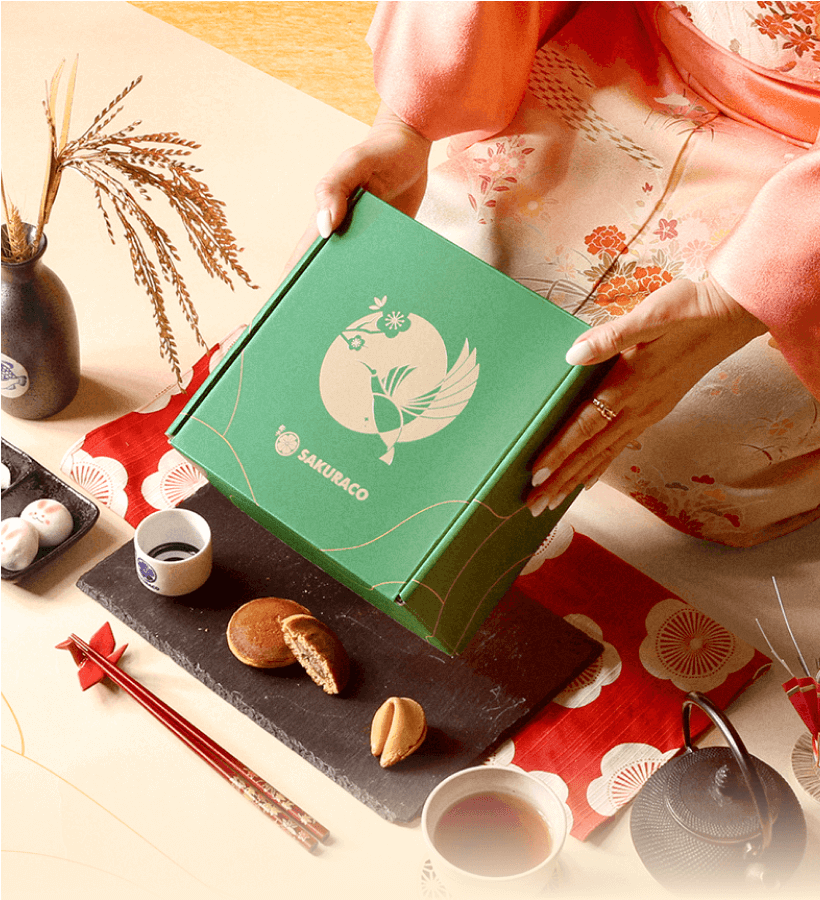
Looking to try out some traditional Japanese snacks? Check out Sakuraco! Sakuraco sends traditional Japanese snacks, teas, and sweets from local makers straight to your door each month!

Modern Japanese Desserts
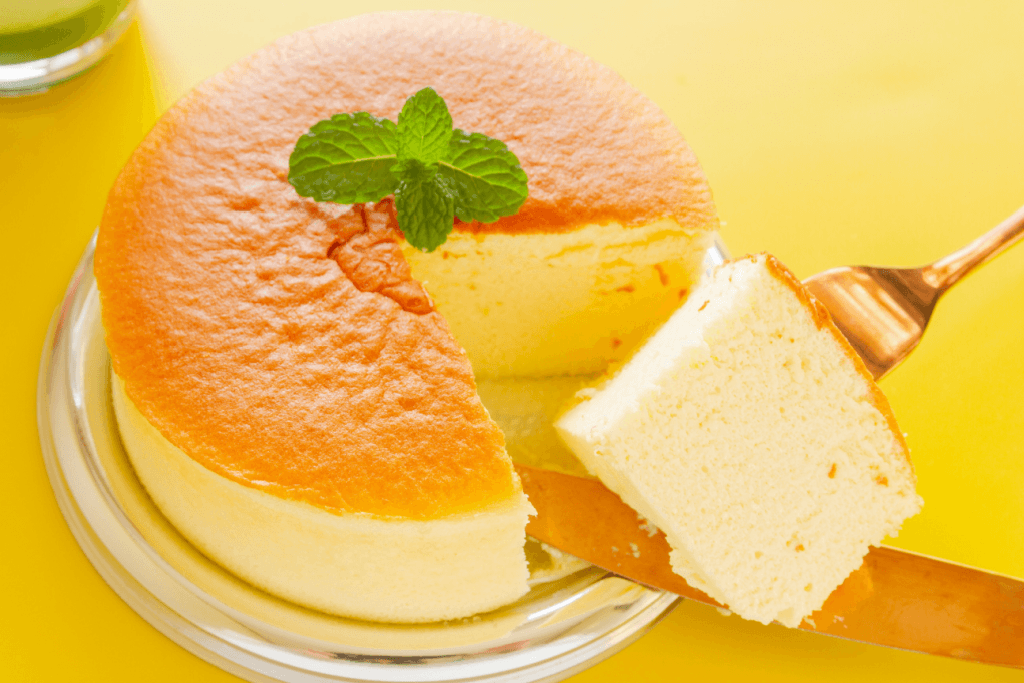
Many modern Japanese desserts were developed as variations of Wagashi. For example, Taiyaki, a fish-shaped cake, traditionally contains anko as a filling. Today, however, fillings such as cream custard, chocolate, and cheese are widely available. Desserts introduced to Japan from other countries have also been altered to suit Japanese tastes, such as cheesecake. Japanese soufflé cheesecake is lighter, fluffier, and less sweet than Western-style cheesecake, giving it a unique, delicate, and sought-after flavor. This same appeal is true of many other Japanese desserts!
Japanese-style desserts can be enjoyed at countless locations, whether at cafes, restaurants, or temples. Kyoto, as a cultural and traditional capital, is famous for its many sweets shops specializing in wagashi. In Tokyo, areas such as Asakusa’s Nakamise shopping street are ideal for sampling a variety of desserts.
How Japanese Desserts Reflect Culture
Japanese desserts and their ingredients tell a larger story about Japan’s history and culture. While wagashi preserves a piece of Japan before Western influence, modern Japanese confectionery is innovative, blending aspects of multiple cultures, techniques, and ingredients. However, certain distinct ingredients, such as mochi or anko, still serve to maintain those unique and delicious tastes. Similarly, many shops still make and sell traditional wagashi! What’s your favorite Japanese dessert? Let us know in the comments!