


Tokyo gardens offer a relaxing escape for visitors looking to get a breath of fresh air. However, Tokyo has more than just the typical gardens we see in the West. Let’s explore five traditional Japanese gardens and what makes them unique!
What makes traditional Japanese gardens different?
Modern Western gardens typically focus on incorporating a variety of flowers and colors. In traditional Japanese gardens, simplicity is the primary focus. Finding a balance between various elements and considering their shapes is a key factor.
A combination of Buddhism, Shintoism, and Chinese culture in the early centuries of Japan greatly influenced garden design in Japan. However, over time, Japan developed its own traditional approach to gardens. In Chinese gardens, architects design structures to stand out; in most Japanese gardens, however, they intentionally blend them into the environment.
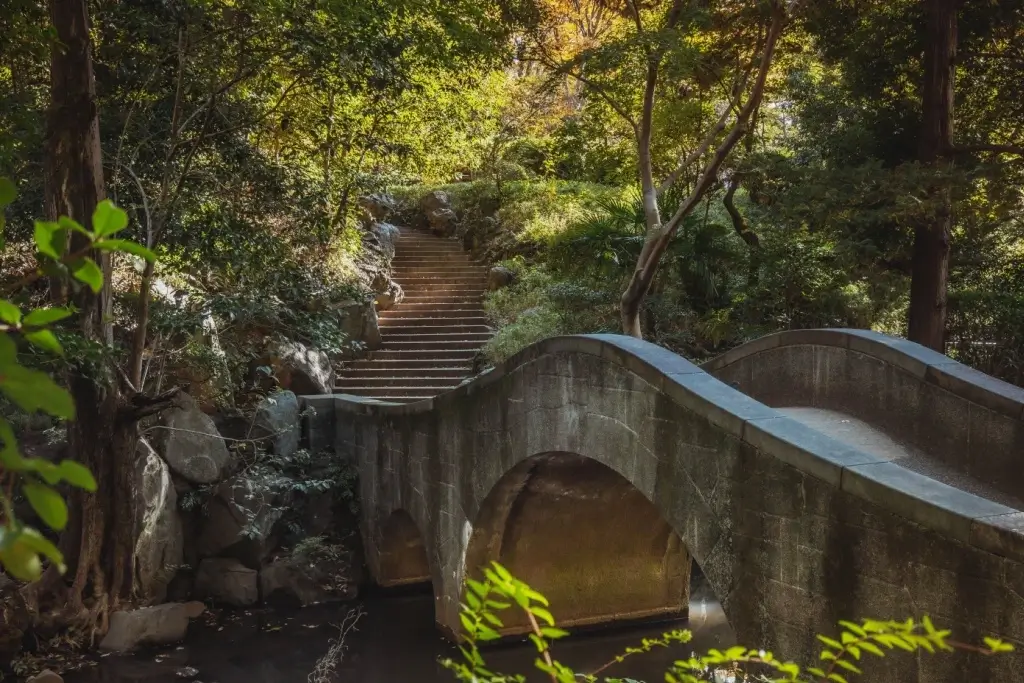
Designers also incorporate man-made elements in earthen colors, such as bridges, stone lanterns, benches, and gates, into the landscape. Miega-kure plays a central role in Japanese landscape design and is commonly translated as “hidden and revealed.” Rather than focusing on how the garden looks from one viewpoint, designers meticulously lay out Japanese gardens with careful consideration of shifting perspectives. As someone walks through the space, fixed elements gradually fade or come into view.
Garden styles
Traditional Japanese gardens have various styles, with one of the most common being the chisen kaiyushiki. This term refers to a large stroll garden, typically designed around a stream or pond. Kaiyushiki are stroll gardens that lack a central pond.
Another well-known form is the karesansui, which refers to a dry landscape garden. It incorporates stone and carefully maintained gravel/sand. Typically, this type is part of a Zen monastery and is used for meditation and contemplation. That connection is where the term “Zen garden” came from.
Koishikawa Korakuen Garden
Located in Bunkyo City, a 25-30 minute train ride from Shibuya Station, Koishikawa Korakuen is one of the oldest gardens in Tokyo. Tokugawa Yorifusa started it in 1629, and his son, Tokugawa Mitsukuni, finished it in 1669. The admission fee is ¥300 ($2 USD).
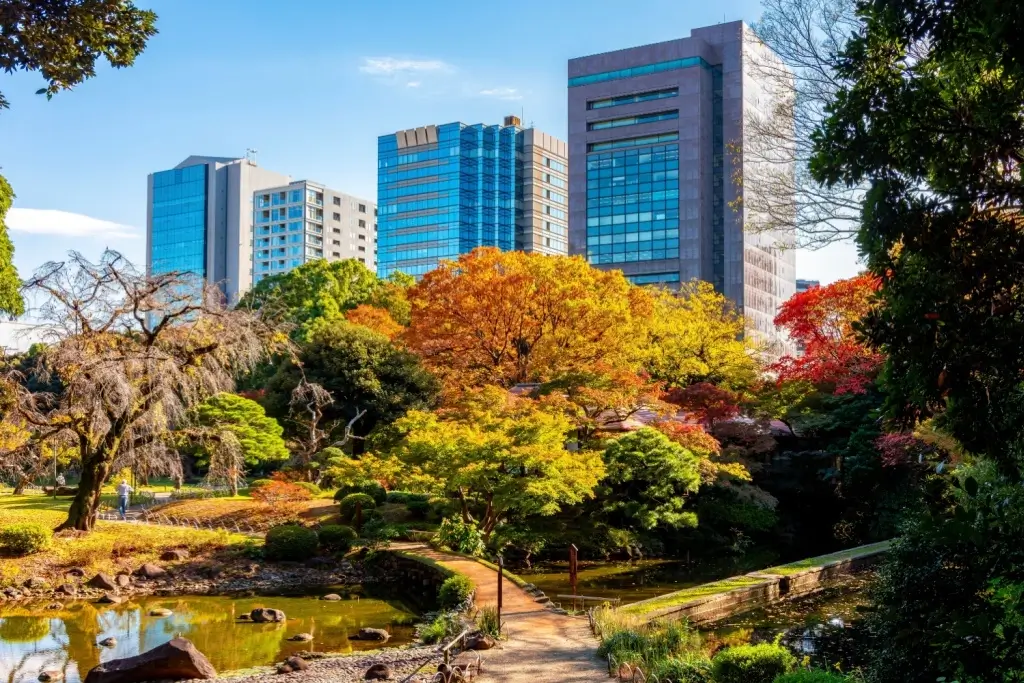
The garden and the neighboring Tokyo Dome City create a striking contrast of tradition and modernity. A Chinese scholar assisted in the creation, so it contains reproductions of famous Chinese and Japanese landscapes. Visitors to Koishikawa Korakuen Garden can enjoy the ever-changing scenery year-round.
Unable to make it to Tokyo but still want a taste of traditional Japan? Explore the delicious goods that Sakuraco has to offer! Sakuraco delivers a variety of traditional snacks, classic Japanese teas, and ceramics right to your doorstep!

Hamarikyu Gardens
Hamarikyu Gardens is about a 35-minute train ride from Shibuya Station and is located in Chuo City. Previously, only the Imperial family used it, but in 1946, officials opened it to the public. Admission costs are ¥300 per person.
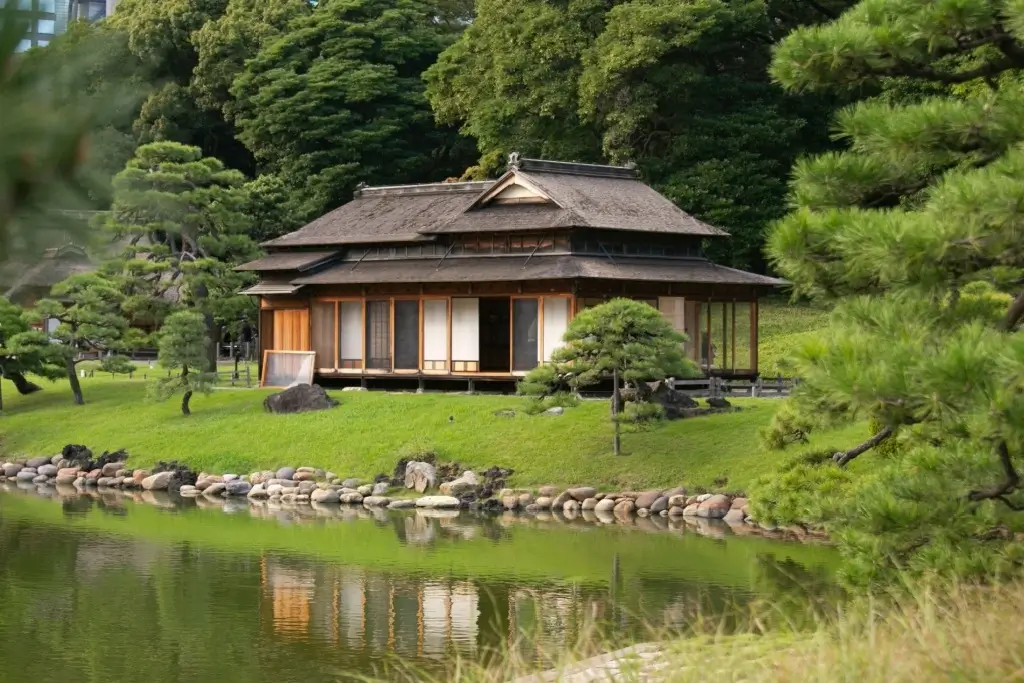
Seawater drawn from Tokyo Bay fills the garden’s central pond, so the water levels fluctuate daily. As a result, you might see some saltwater fish swimming within. Additionally, a teahouse is located in the middle of the pond, where people can relax and enjoy the view.
Kyu-Shiba-rikyu Garden
From Shinjuku Station, it is a 22-32 minute commute to the Kyu-Shiba-rikyu Garden, located in Minato City. To enter, it costs ¥150 per person. One of the oldest surviving kaiyushiki gardens, it was originally built in the early Edo period (late 1600s). In 1924, it was rebuilt and reopened to the public after undergoing numerous ownership changes and sustaining damage in the Great Kanto Earthquake.
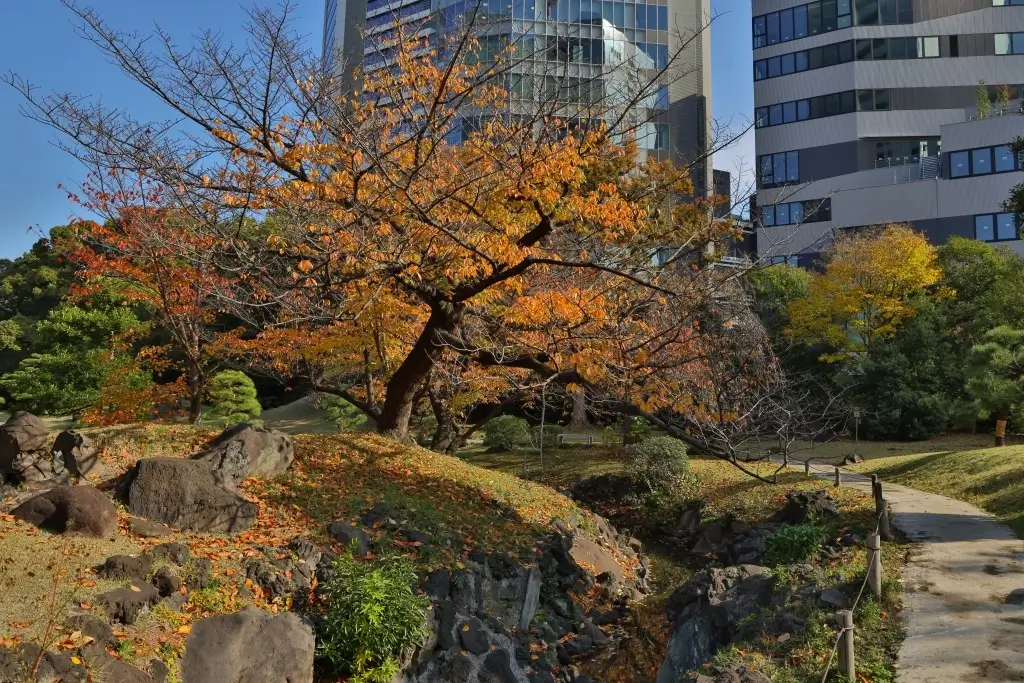
Spring is one of the best times to visit this garden, as it offers a variety of seasonal blossoms. Cherry blossoms, plum blossoms, and hydrangea are just a few examples. In late April, the garden is popular for its wisteria flowers.
Meiji Jingu Gyoen (Inner Garden)
Located conveniently within Meiji Jingu Shrine, admission costs for the garden are ¥500 per person. It was constructed by Lord Kato of Kumamoto, and during the Meiji period (1868-1912), the land became Imperial property. Emperor Meiji commissioned various additions to the garden, including the Kakuun-tei teahouse as a rest spot for Empress Shoken.
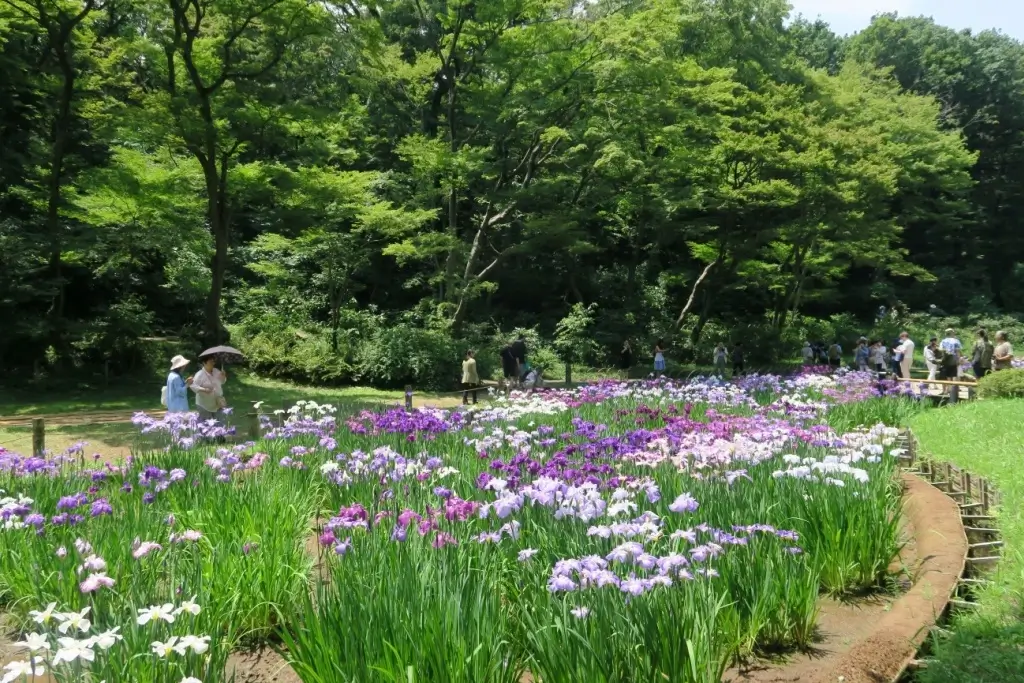
During fall, the Japanese maple trees provide a gorgeous display of autumn foliage. Mandarin ducks appear in the winter, and azalea flowers bloom in the spring. The iris garden comes to life in June and is said to have been a favorite spot for the Imperial couple. You can see more than 1,500 iris plants from 150 different species.
Hotel New Otani Tokyo’s Japanese Garden
With free admission and only 20 minutes away from Shinjuku Station, this traditional Japanese garden makes an excellent destination for visitors. It has a rich history spanning over 400 years, having been in the possession of various samurai lords. Spanning 10 acres, this impressive space has multiple bridges, stone lanterns, and waterfalls.
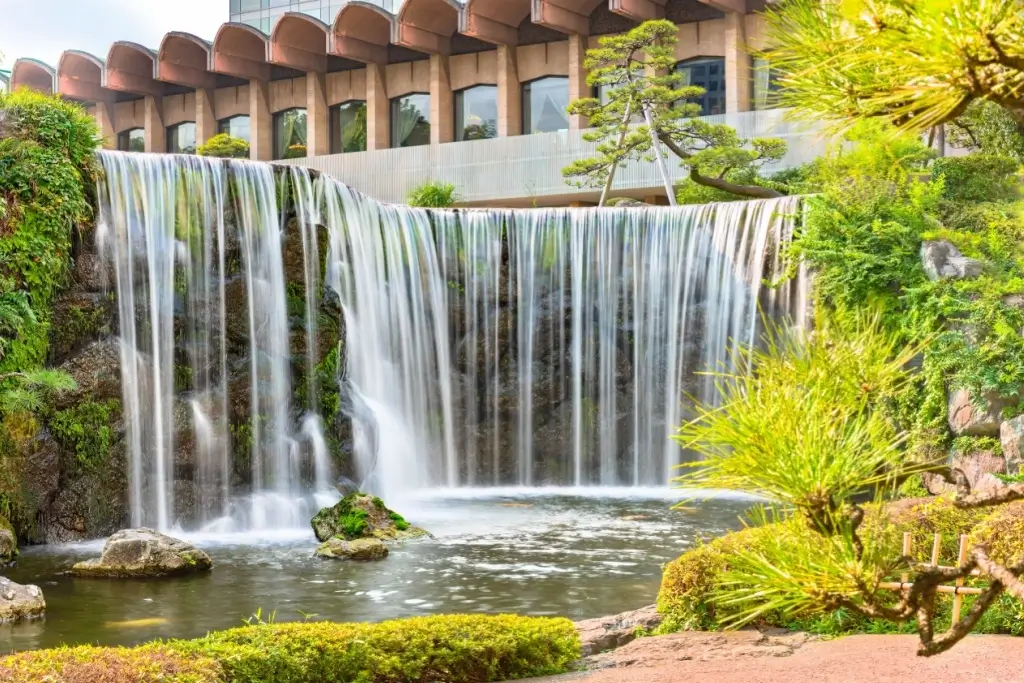
In the evenings, it is illuminated with LED lights that change colors depending on the season. There are also small karesansui gardens within. Hotel New Otani Tokyo features several restaurants with views of the garden, allowing visitors to enjoy the landscape both outside and inside.
What makes traditional Japanese gardens worth visiting?
With a population of over 14 million in Tokyo alone, it can be overwhelming to be in such a densely populated area. Tokyo gardens, particularly traditional Japanese ones, offer a unique opportunity to immerse yourself in the culture and experience a slower pace of life. Each one has its own unique history and different appeals, making it an enjoyable experience. Have you visited any of these gardens, or would you like to visit a particular one? Let us know in the comments!