


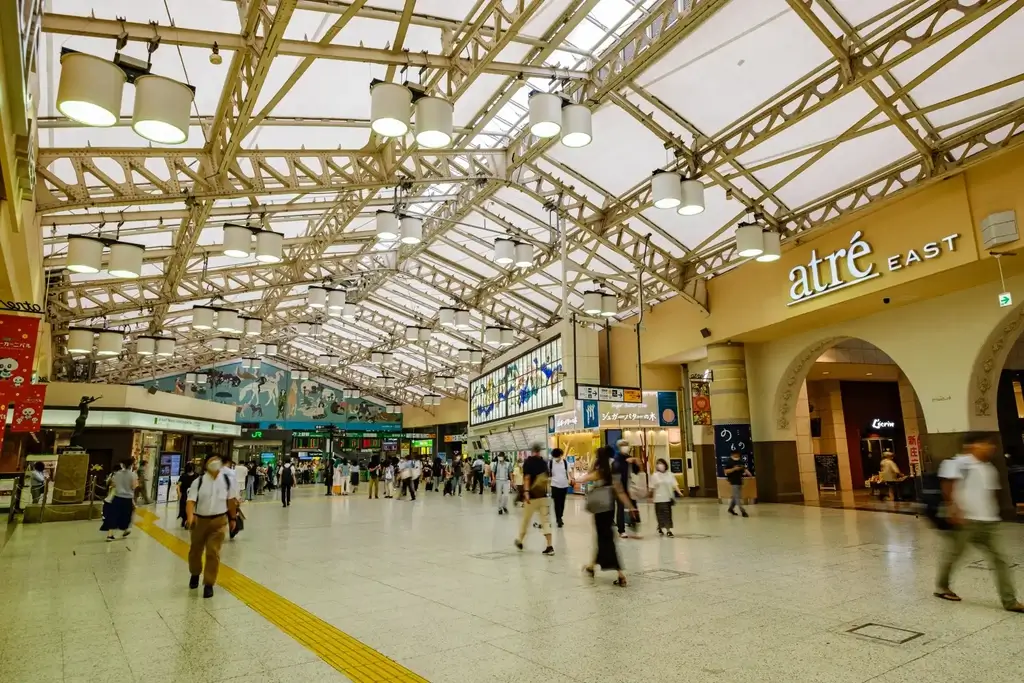
A perfect example of Japan’s love for color and art can be found at JR Ueno Station in Tokyo. For decades, a large mural has graced a wall in the train station, bringing light and joy to countless people. In a moment of profound positivity and progress, much-needed restorations to the mural are nearly complete!
Where is Ueno Station?
Ueno Station is located in Tokyo’s Taitō Ward, a vibrant area known for its mix of culture, history, and convenience. It sits at the northern edge of central Tokyo and serves as a major gateway to the city’s eastern regions and beyond.
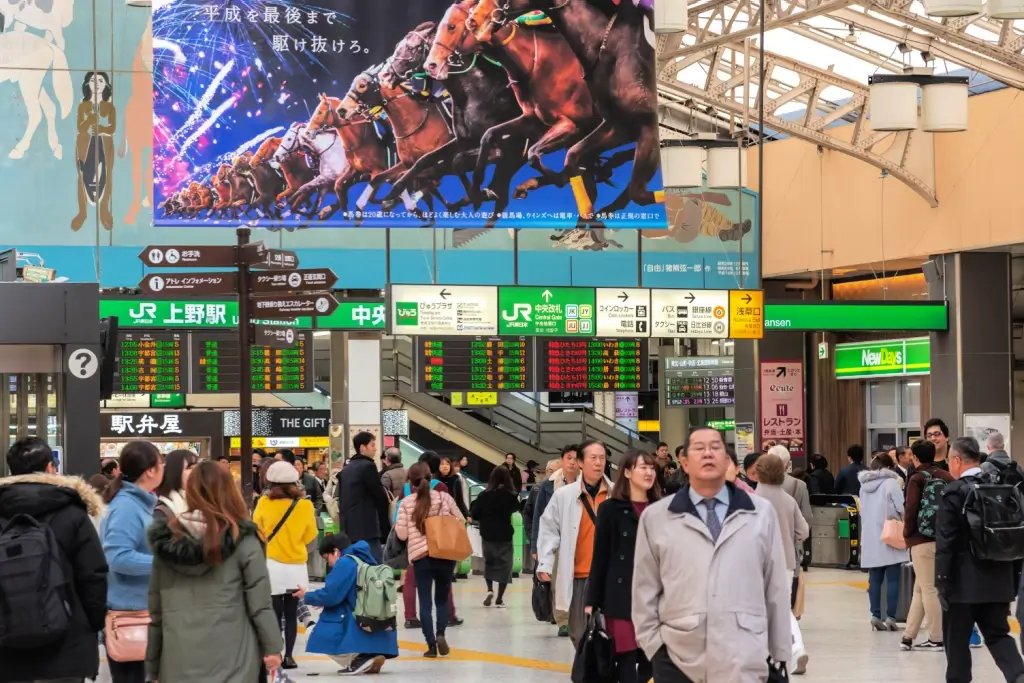
The station connects several JR East lines—including the Yamanote, Keihin-Tōhoku, and Utsunomiya lines—as well as Tokyo Metro’s Ginza and Hibiya lines. Nearby, visitors can easily reach Ueno Park, Ueno Zoo, and a cluster of world-class museums, making it a popular stop for both locals and travelers.
What is “Jiyu”, the Ueno Station mural?
Japanese artist Genichiro Inokuma painted the mural inside JR Ueno Station. It is titled “Jiyu,” meaning “freedom.” The artwork shows people holding simple items such as apples, skis, and baskets. These everyday objects remind travelers of the culture of the northern towns they may have come from.What’s truly interesting about the mural, however, is its art style.
Rather than being painted in classical Japanese styles seen in Nihonga or Ukiyo-e pieces, the mural adopts a distinctly European style in terms of its composition and characterization. This is because Inokuma traveled to France in his youth and studied under the famous French painter Henri Matisse. Matisse is famous for spearheading the art movement known as Fauvism, a style that uses bright colors, flat compositions, and simplified forms.
Why is “Jiyu” so important historically?
“Jiyu”, as a mural, holds great cultural and historical significance for the people of Japan. Following World War II, Japan was reeling. Economically and morally, Japan was in dire straits, and many, many people were lost without work or homes. The JR Ueno Station became a haven for those displaced and became known as “The Gateway From the North” due to the number of people traveling south from the Tohoku and Hokuriku regions.
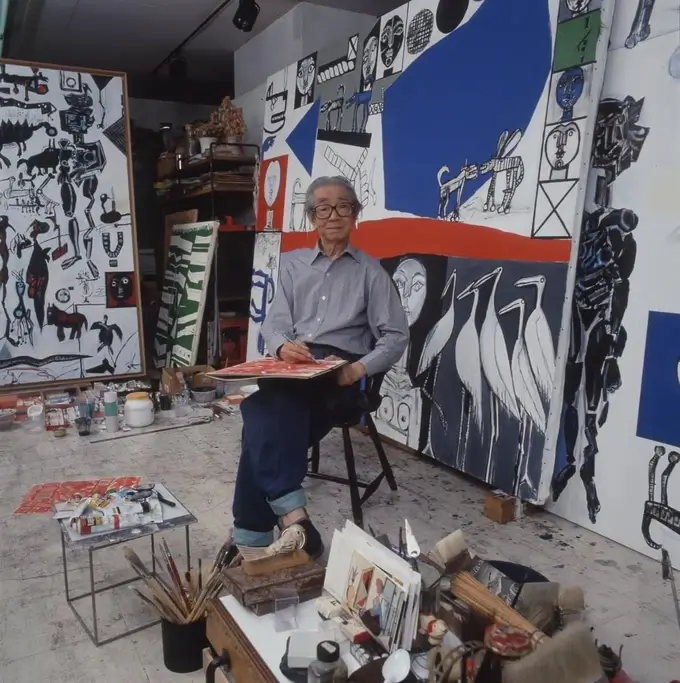
To boost morale and bring happiness back into people’s lives, the advertiser, Toshio Kobayashi, proposed painting a positive mural. After much discussion, he convinced Inokuma to paint the piece. Kobayashi’s plan worked: after its completion, “Jiyu” became a much-appreciated and celebrated work of art that people could see every day. Sometimes, even the simplest of things, such as seeing a woman hold a basket of fruit, can ease the burdens we all carry every day.
What Are They Doing to Restore the Mural?
Unfortunately, years of normal wear and tear, plus constant sunlight from a nearby window, have worn the mural down. There was even a brief moment when officials considered removing “Jiyu” entirely, but people’s insistence that it stay helped save the mural. The first restoration of it was conducted in 1984, followed by another in 2002.
The current restoration effort began in June of 2025 and includes the aid of roughly 20 people, some of which are from the Tokyo University of the Arts. Through the astute and careful work of these volunteers, the mural is being fixed bit by bit. The specific techniques used to fix the mural include repairing areas where the paint has lifted, using putty to fill areas that have flaked off, and performing general repainting as needed. Luckily, thanks to the two previous restoration efforts, the mural’s overall condition is rather good, considering how busy Japanese train stations can get.
Are you looking for great snacks after checking out great art? Check out Sakuraco! Sakuraco delivers traditional Japanese snacks, sweets, teas, and more from local Japanese makers right to your door, so you can enjoy authentic Japanese flavors at home.

Why should you check out “Jiyu” if you’re in Tokyo?
The funny thing about public art pieces like “Jiyu” is that so many people look at them every day and often pay them no mind. In many ways, they simply become a part of the daily routine. We see the same street signs, storefronts, and traffic lights day after day. It all becomes a blur. In the case of public art, they, too, can become a part of the daily grind. But it isn’t until they’re on the verge of disappearing that people can suddenly realize how wonderful they are.
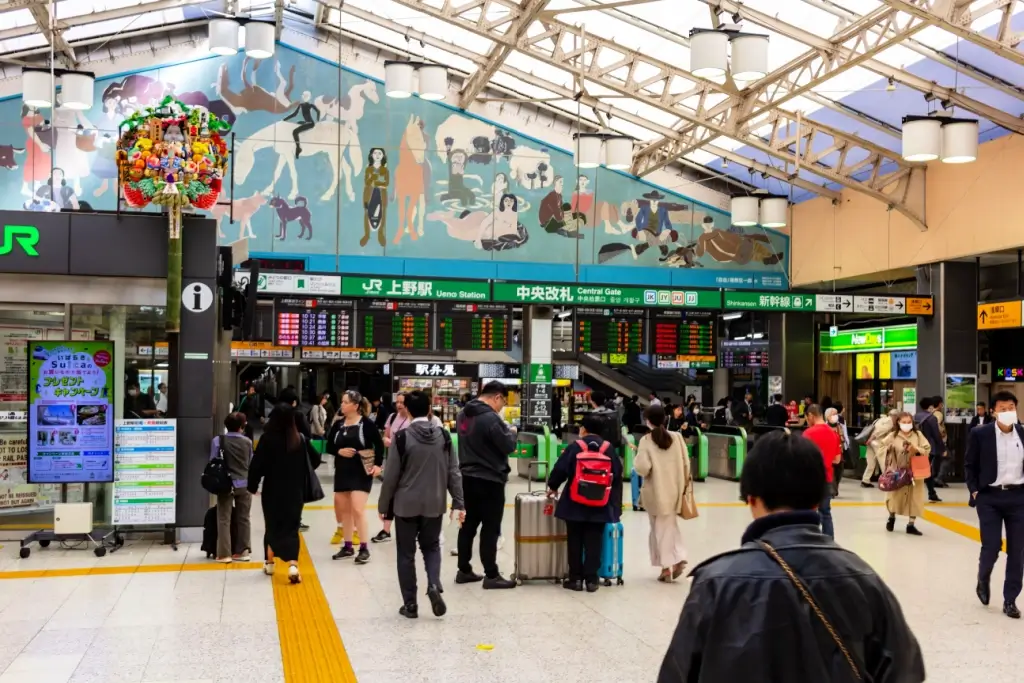
We can appreciate the color they bring to the monotony and tedium of working. They can be that specific piece of local flavor that makes us smile when we return home after a long absence. It’s amazing and wonderful that “Jiyu” is receiving the love and care it deserves. It would be so much easier to simply shrug and either let it deteriorate or, worse, tear it down or paint over it. “Jiyu” is a product of a very dark time in Japan’s history and is tangible, physical proof that there is light after darkness. Have you seen “Jiyu” in person before? If so, what did you think? Please let us know! We’d love to hear from you!