


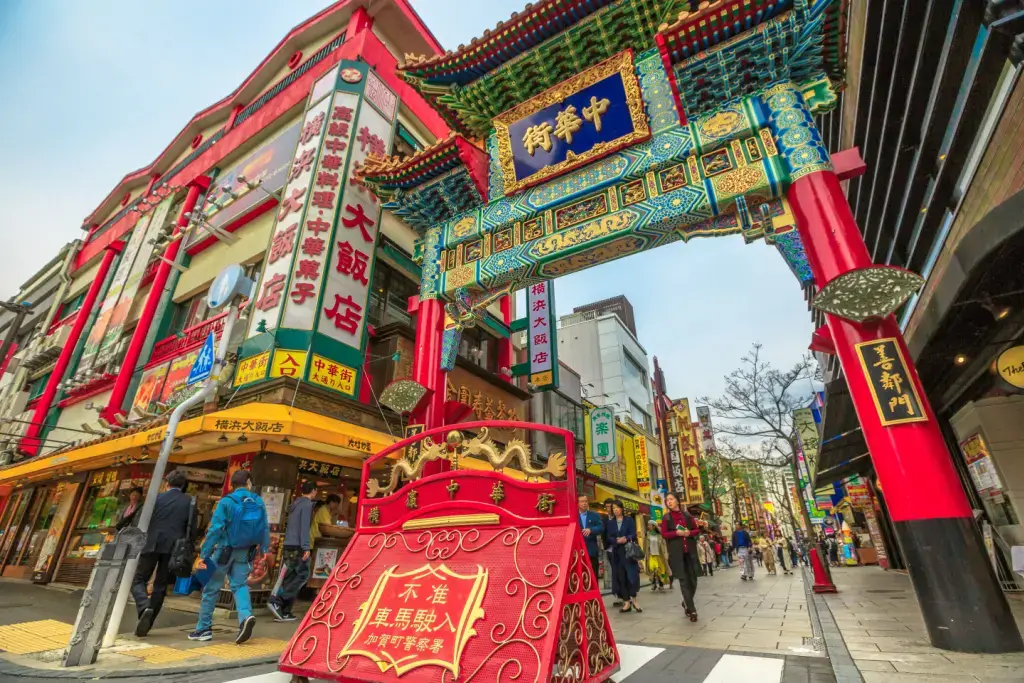
Yokohama, a city just south of Tokyo, is home to the largest of Japan’s three Chinatowns, called “chukagai” in Japanese. Established in the late 19th century, Yokohama Chinatown is a historic area home to hundreds of businesses.
This neighborhood has everything from souvenir shops to restaurants, packed with more stores than residences. Keep reading to discover how a once-small settlement became a lively, culturally rich district.
Origin of Yokohama Chinatown
Yokohama’s Chinatown ranks among the city’s top tourist attractions. It boasts a rich history dating back to 1859. That year, Yokohama opened as an international seaport. Trading routes soon formed with Hong Kong and Shanghai. This sparked an influx of Chinese settlers. Foreign residents faced restrictions to designated areas. Chinese settlers, merchants, and restaurant owners moved there. The area quickly grew into today’s vibrant cultural hub.
Temples
Following the settlement of Chinese immigrants in the area around Yokohama’s port, Kuan Ti Mao (also called Kanteibyo) Temple, originally a small shrine founded by a single settler in 1862, was established. Kuan Ti Mao Temple has been rebuilt multiple times over the years due to various disasters. One of these events includes the Great Kanto Earthquake of 1923, during which the original temple was destroyed.
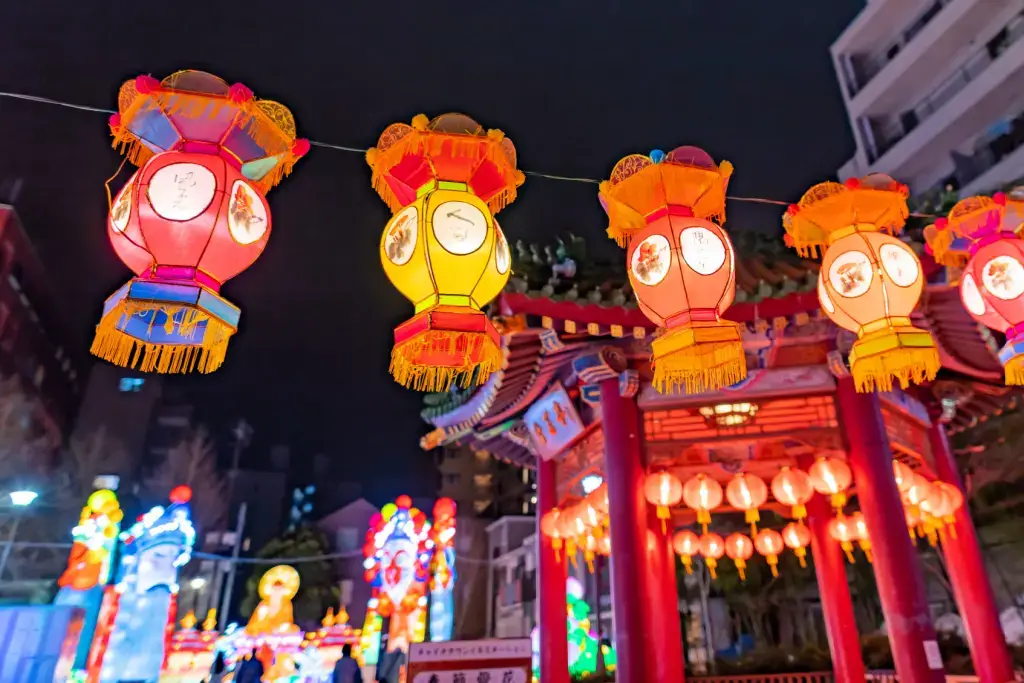
The current structure is the fourth rebuild of the temple and features intricately carved marble slabs and colorful depictions of dragons. Moreover, there are red and gold motifs throughout. Guan Yu, the primary deity at the Kuan Ti Mao Temple, was originally a 3rd-century general. People now worship him as a god of business success and financial prosperity.
The second Temple in Chinatown, opened in 2006, is Ma Zhu Miao Temple. It is dedicated to Mazu, the goddess of the sea, to which many pray for safe travels. These two main temples, both beautifully constructed and located in the heart of Chinatown, share a piece of the area’s history and its residents’ cultural heritage.
Gates
Across Chinatown, there are 10 extravagantly decorated pailou-style gateways, each representing something different. Four of these gates stand at different main entrances to Chinatown: Choyomon (east gate), Suzakumon (south gate), Enpeimon (west gate), and Genbumon (north gate).
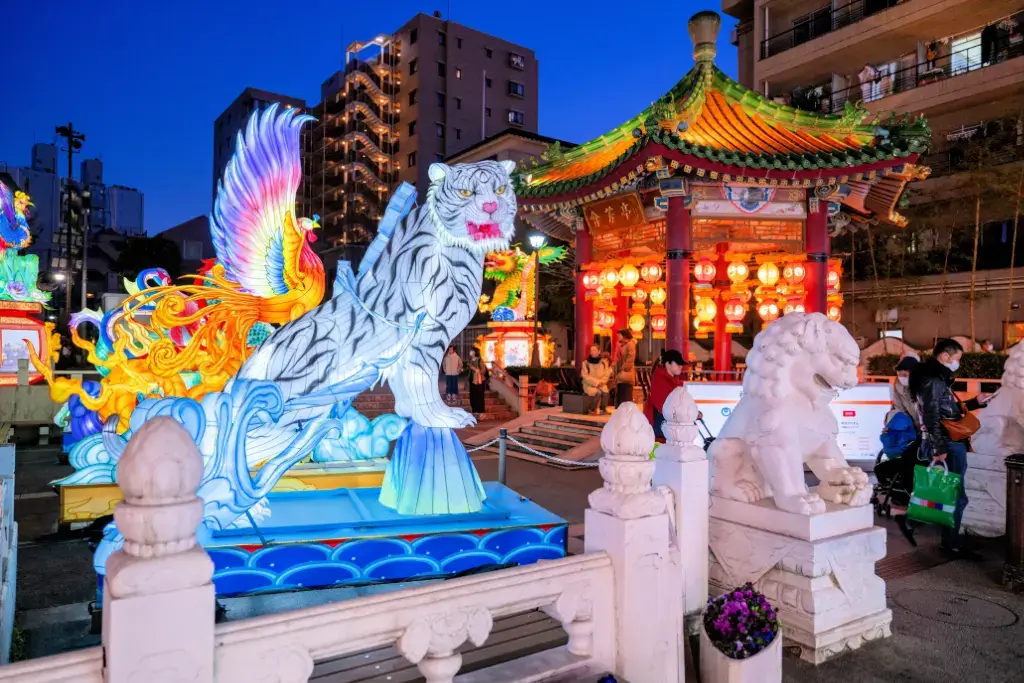
Each is associated with one of four guardian beasts appearing in Chinese mythology, all of which represent the four cardinal directions, seasons, and elements. These four are the Blue Dragon (East/Spring), the Suzaku (South/Summer), the White Tiger (West/Autumn), and the Genbu (North/Winter). It is believed that the land where these four beasts are placed is protected from evil spirits and will bring good fortune.
Aside from these four gates, there is also the famous Zenrinmon (“Zenrin” meaning “good neighbor”) gate. It stands at the western entrance to Chukagai Odori, the main street. In addition, the Zenrinmon was the first of the gates to be built (in 1955), and is also considered a symbol of peaceful relations between the Chinese and Japanese people. For visitors walking through Chinatown, the sheer size and intricacy of the gates are sure to grab their attention!
Are you looking for amazing snacks from Japan? Check out Sakuraco! Sakuraco sends traditional Japanese snacks, teas, and sweets from local makers straight to your door each month!

Shopping Streets and Cuisine
For many visiting Chinatown, their first stop is Chukagai Odori (Chinatown Main Street), a lively shopping street filled with multiple-story souvenir shops, main restaurants, and a variety of street food stalls. Running north-to-south between Chukagai Odori Kanteibyo road is Ichiba-Dori, a smaller street market with many essential food businesses such as butchers, greengrocers, and fishmongers, all of which help to supply restaurants in the area. Within this narrow street are even more stores selling Chinese tea, clothes, traditional crafts, and jewelry.
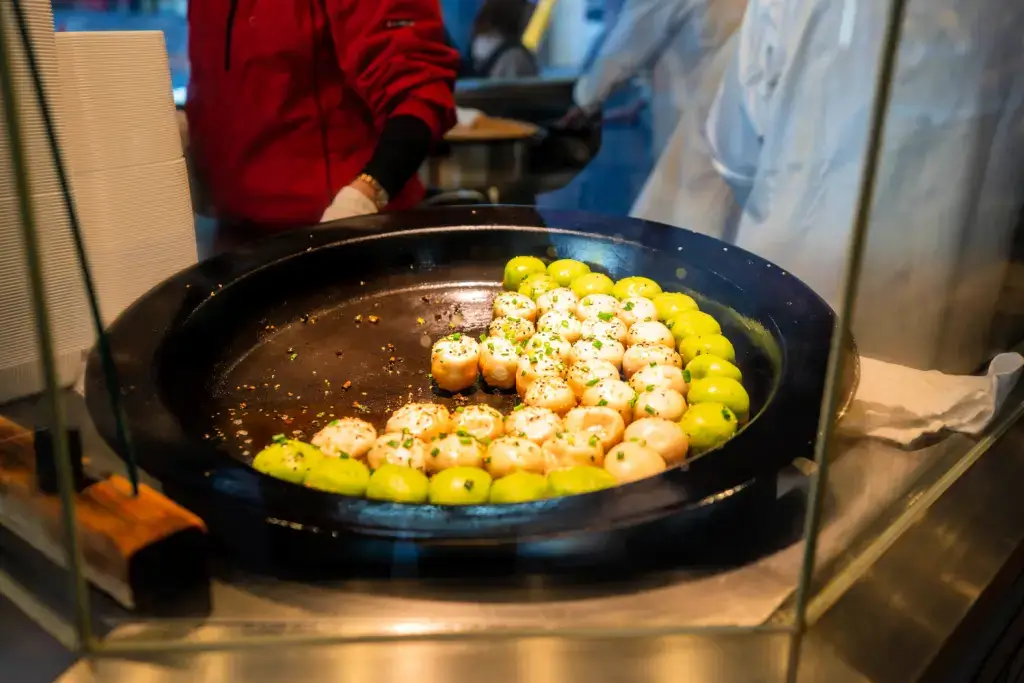
With around 500 restaurants (excluding food stands), Chinatown offers a vast array of food, from gourmet dining to quick, tasty snacks. Some popular favorites include pork buns, Peking duck rolls, egg tarts, soup dumplings, and milk tea. One of these restaurants is Heichinro, established in 1884 and serving Cantonese cuisine. Generally, Heichinro is considered the oldest Chinese restaurant in Japan, offering dim sum with dishes such as noodles and stir-fries. Other popular cuisines in the area include Beijing, Shanghai, and Sichuan. Moreover, the area’s culinary options are endless, offering something for everyone.
Chinese Spring Festival
The largest celebration in Chinatown is, without a doubt, Chinese New Year (or Spring Festival), a 15-day event held each year, typically in late January and early February, following the lunar calendar. During these festivities, expect to watch traditional Chinese performances, parades, lion dances, as well as illumination and colorful lanterns that light up the streets even at night. For 2026, the festival will take place from February 17th to March 3rd.
Access
Just 40 minutes from Tokyo by train, Yokohama Chinatown is a perfect destination, because it’s a bustling neighborhood with endless shops, restaurants, and cultural experiences. Overall, the area is easily accessible from Motomachi-Chukagai Station. If you’ve ever been to Yokohama Chinatown, let us know what you thought in the comments below!