


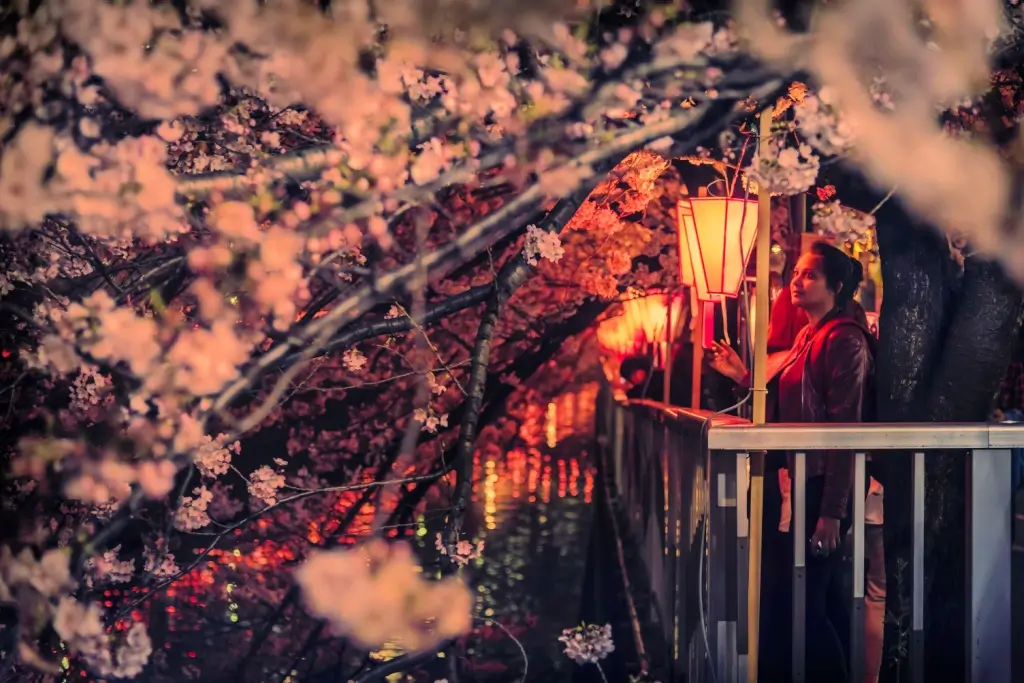
When it comes to yozakura in Japan, Nakameguro is often the first place that comes to mind. This stylish Tokyo neighborhood transforms each spring into one of the country’s most iconic spots for night cherry blossoms. Lanterns glow along the river, petals shimmer overhead, and the entire area takes on a lively, almost cinematic atmosphere after sunset.
While Nakameguro is a must-visit, it’s far from the only place to enjoy night cherry blossoms in Japan. From peaceful moat-lined walkways to historic gardens and castle parks, exploring beyond Nakameguro reveals just how diverse and memorable yozakura can be.
Nakameguro, Tokyo
At the heart of Nakameguro’s appeal is the Meguro River. Hundreds of cherry trees line both sides of the waterway. During peak bloom, the branches form a soft canopy of blossoms. This canopy stretches for kilometers. It creates one of Tokyo’s most recognizable spring scenes.
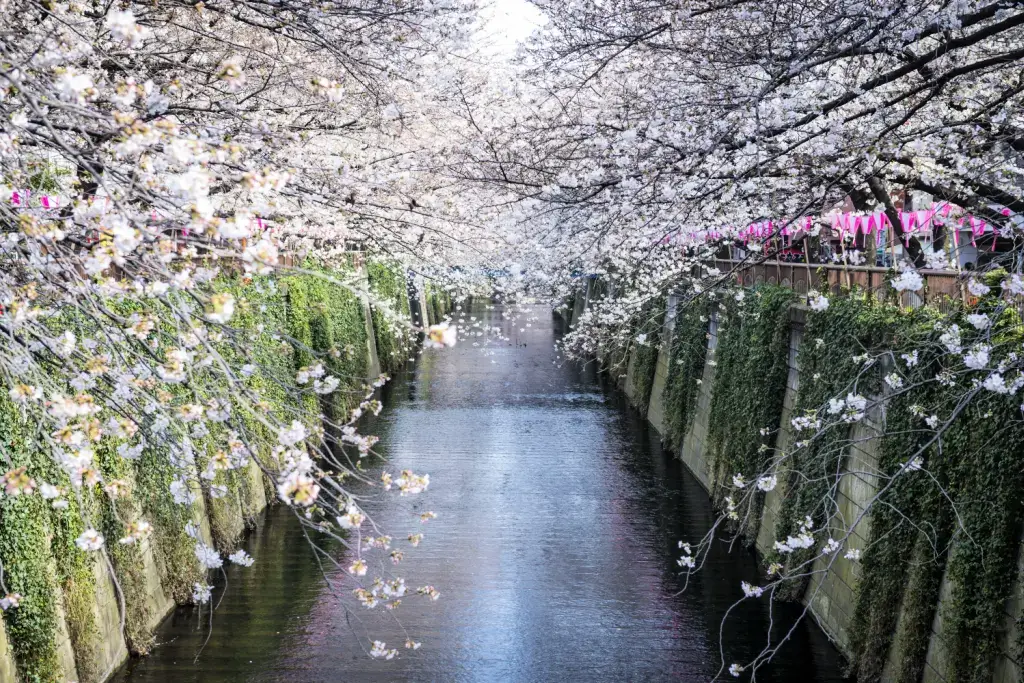
In the evening, lanterns illuminate the trees. They cast a warm pink glow. The light reflects beautifully on the river below. The area becomes especially vibrant during the Nakameguro Sakura Festival. Local shops extend their hours. Seasonal vendors also appear, depending on the year and crowd control measures.
Nakameguro is known for its lively and social atmosphere. It is ideal for an evening stroll. However, it is also one of Tokyo’s busiest cherry blossom destinations. Visiting on a weekday can help. Arriving earlier in the evening can also make things easier. Even so, crowds are still common during peak bloom.
Chidorigafuchi, Tokyo
For a quieter contrast to Nakameguro, Chidorigafuchi offers a more refined yozakura setting. Located along the moat of the Imperial Palace, this scenic pathway is lined with cherry trees that arch gracefully over the water.
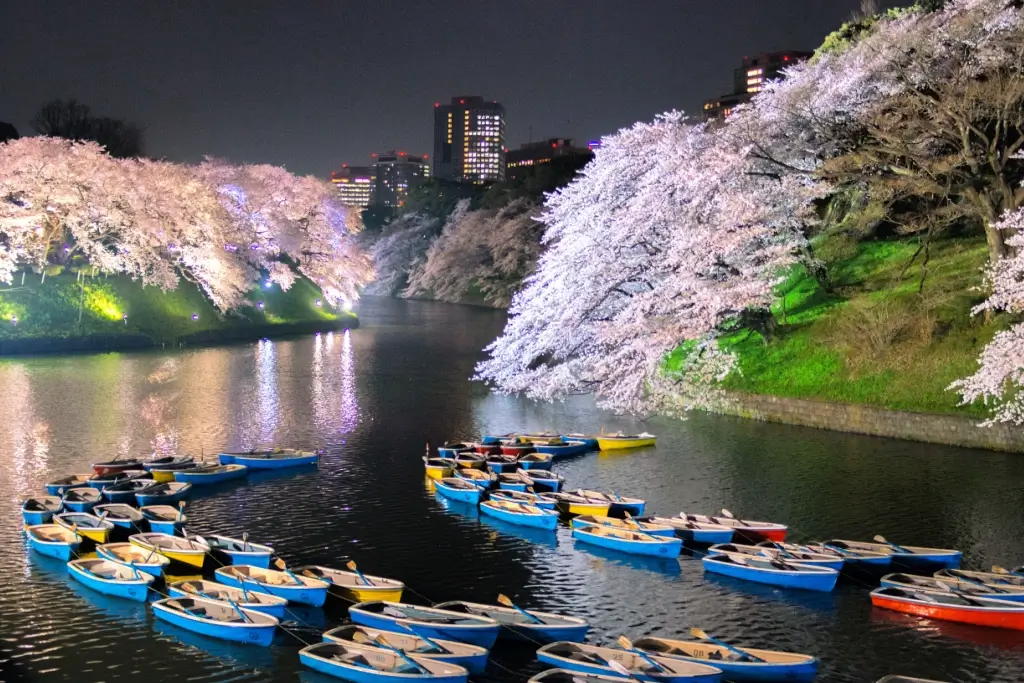
At night, the blossoms are softly illuminated, and their reflections ripple across the moat, creating a calm and atmospheric scene. While it can still become crowded during peak season, the overall pace feels slower than Nakameguro, making it a strong choice for those seeking a more relaxed nighttime viewing experience.
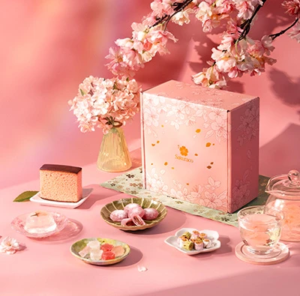
Are you looking for great snacks to enjoy while watching the cherry blossom trees? Check out Sakuraco! Sakuraco sends traditional Japanese snacks, teas, and sweets from local makers straight to your door each month!

Rikugien Garden, Tokyo
Rikugien Garden offers a traditional and carefully curated approach to yozakura. This Edo-period garden is known for its thoughtfully designed landscapes, featuring ponds, winding paths, and scenic viewpoints that highlight seasonal beauty.
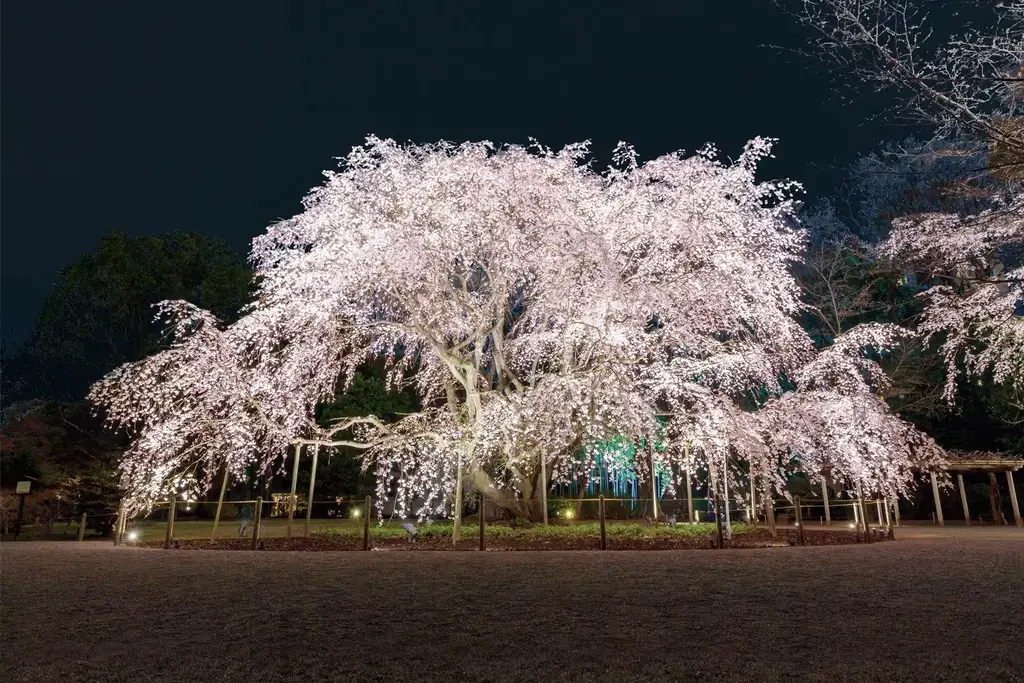
During cherry blossom season, the garden typically hosts special evening openings, when its famous weeping cherry tree is illuminated after dark. Event details, including entry systems and hours, may vary from year to year, but the atmosphere remains consistently calm and immersive. Compared to Nakameguro’s busy riverwalk, Rikugien provides a quieter, more contemplative setting.
Takada Castle Site Park, Niigata
For a more expansive and festival-oriented experience, Takada Castle Site Park in Joetsu is one of Japan’s standout yozakura destinations. The park features around 4,000 cherry trees, which are illuminated by thousands of lanterns during peak bloom.
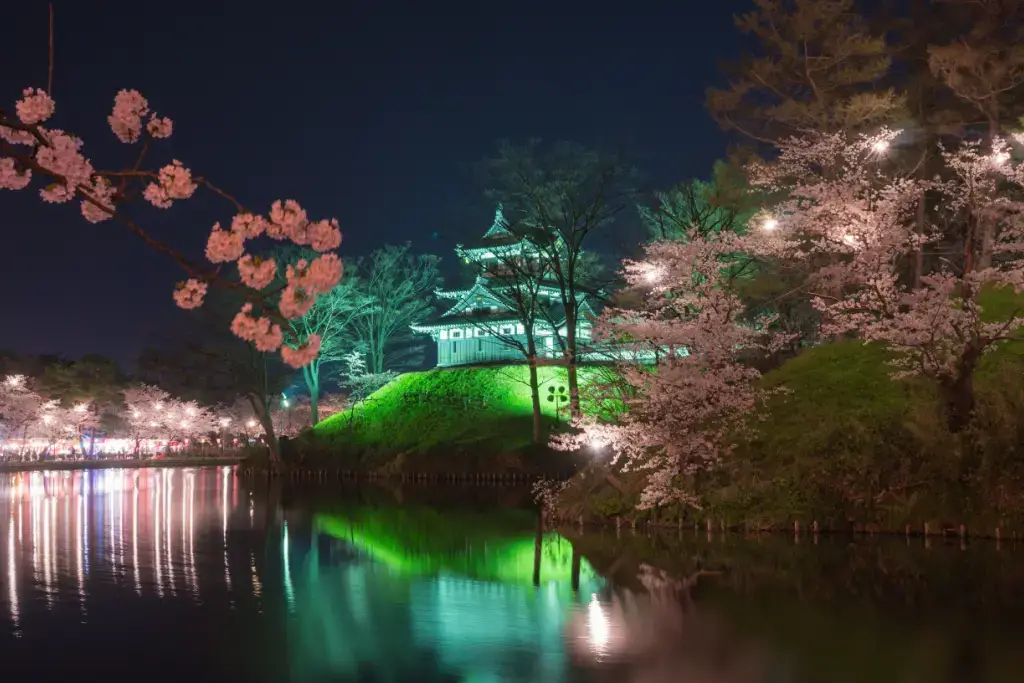
The remains of Takada Castle add historical depth to the scene, particularly when reflected in the surrounding moat alongside glowing blossoms. During the annual Takada Cherry Blossom Festival, food stalls and local vendors create a lively, traditional festival atmosphere that contrasts with Nakameguro’s more urban setting.
Maizuru Park, Fukuoka
Maizuru Park in Fukuoka offers a balanced yozakura experience that combines history, open space, and seasonal beauty. Built around the ruins of Fukuoka Castle, the park features wide lawns and historic stone walls, creating a spacious, visually striking environment.
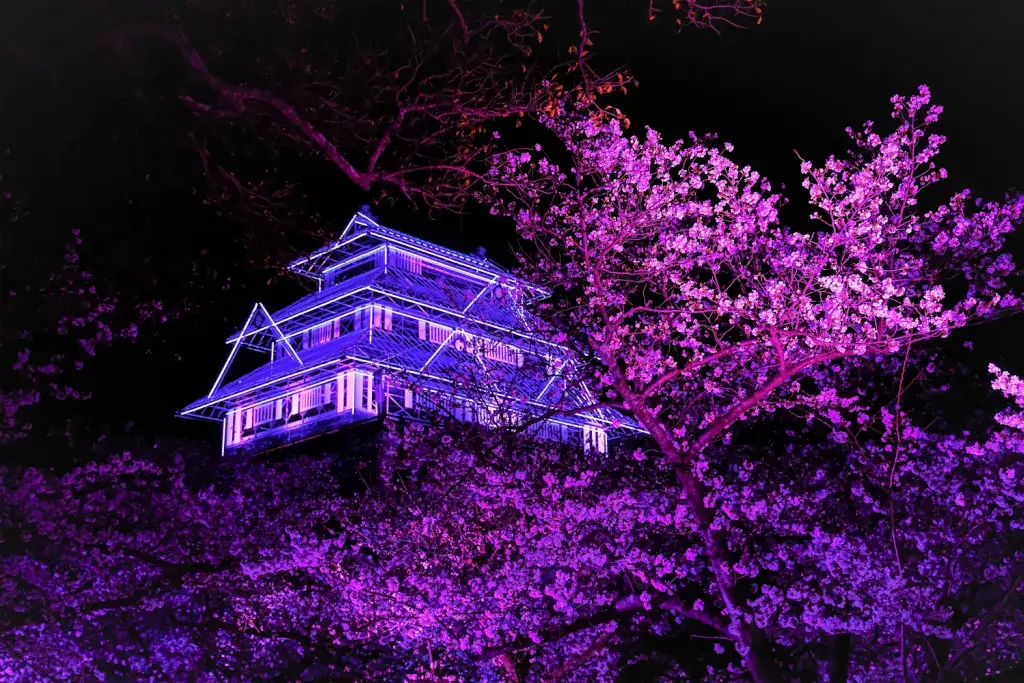
At night, illuminated cherry trees cast a soft glow across the grounds, enhancing both the blossoms and the surrounding architecture. While there are often seasonal food stalls and evening visitors, the atmosphere tends to be more relaxed than in major urban hotspots, making it easier to explore at a comfortable pace.
Miharu Takizakura, Fukushima
For a completely different kind of yozakura experience, Miharu Takizakura offers something truly unforgettable. This weeping cherry tree, estimated to be over 1,000 years old, is one of Japan’s most famous and revered sakura.
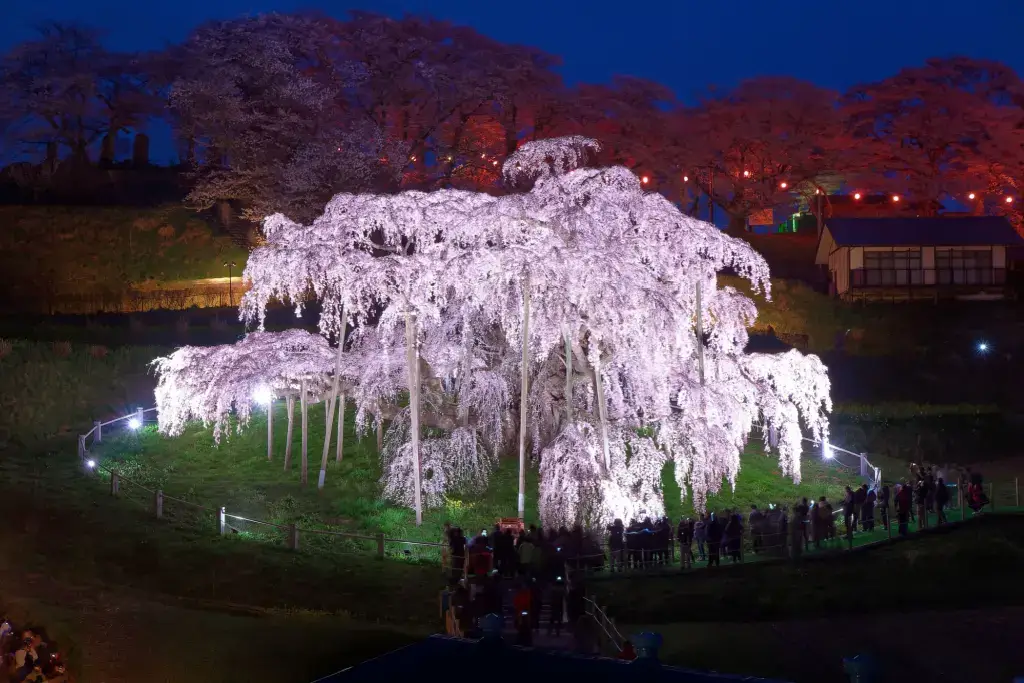
Its cascading branches resemble a flowing waterfall, giving the tree its name. At night, it is illuminated against the dark rural landscape, creating a dramatic and deeply atmospheric scene. Although located in a more remote area and often drawing large crowds during peak bloom, the experience remains strikingly focused on the natural beauty of a single tree.
Why Nakameguro Still Stands Out
Even with so many remarkable alternatives, Nakameguro remains one of the best places to experience yozakura in Japan. Its combination of accessibility, vibrant atmosphere, and striking river views makes it especially appealing for first-time visitors.
That said, pairing Nakameguro with another location—whether it’s the calm elegance of Chidorigafuchi or the festival energy of Takada Castle Site Park—offers a deeper appreciation of Japan’s cherry blossom culture. Yozakura is not just about where you go, but how you experience it: slowly, thoughtfully, and under the soft glow of spring nights.