


Japanese snacks have become more popular worldwide, and even traditional Japanese sweets like mochi are less of a mystery than a few years ago. However, there are still many secrets left to traditional wagashi sweets, one of them being Japan’s unique sugar.
What is the history of wasanbon?
The history of wasanbon begins in the Edo period (1603 – 1867), about 200 years ago. Even though the country was closed off to foreign visitors then, what little trade there was had already introduced Japan to sugar. The eighth shogun, Yoshimune Tokugawa expressed an interest in cultivating sugarcane in Japan, and stipends were given to domains willing to try.
Present-day Kagawa and Tokushima Prefectures on Japan’s smallest main island, Shikoku responded to the call. Sugarcane plantations were set up, and through trial and error, farmers eventually created a unique processing method yielding an especially fine-grained sugar.
These two prefectures are still the only ones producing wasanbon today, although the production volume has decreased significantly. Since the sales of Western sweets have effectively overtaken Japanese ones, cheap refined white sugar tends to be the go-to choice.
Interested in discovering Japan through trying out traditional Japanese snacks and tea? Sakuraco sends unique seasonal and regional Japanese snacks and sweets to your door.

What makes wasanbon unique?
Most makers of traditional Japanese sweets, so-called wagashi, still rely on wasanbon. This is hardly surprising because they owe their existence to it. It’s said that before the arrival of wasanbon, the sweetest food in Japan was persimmons.
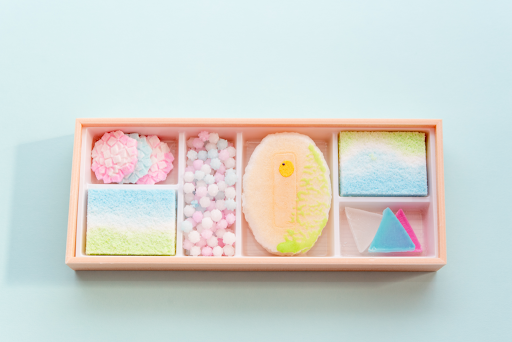
Wasanbon’s sweetness lasts shorter than regular white sugar, which tends to linger for a while. This perfectly suits wagashi, which was created to compliment the taste of matcha tea, rather than have too strong of a distracting taste.
Where did the name “wasanbon” come from?
The process that makes wasanbon unique is in its name. Wa means Japanese, san the number three, and bon refers to trays. To make this rare sugar, a craftsman or -woman will mix water with the raw, black sugar and knead it by hand on a wooden tray.
The sugary juice created through this process is removed, and the kneading is repeated twice. This process takes around 20 days and removes so much material that only about 40% of the original amount remains.
The labor-intensive process is still performed in the same way to give the sugar its fine grain and taste by eliminating impurities. The result is a fine-grained sugar that can be used just like any other sugar but shines when worked into traditional Japanese tea sweets.
Where does it end up?
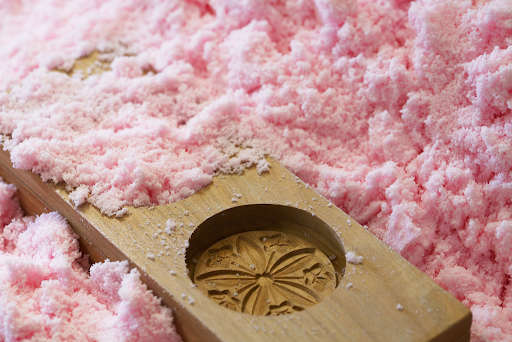
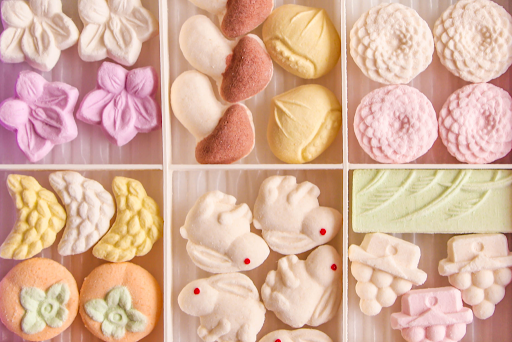
While wasanbon is used to sweeten tea, coffee, or even in cakes these days, it’s primarily known as the main ingredient in a traditional Japanese sweet called higashi. Higashi are dry sweets made by mixing wasanbon with coloring, rice flour, and a small amount of water, then pressing it into shape using a wooden mold.
The fine grains of wasanbon allows for intricate detail, which is used to represent seasonal motifs like flowers or animals in the final product. The resulting higashi complements the slightly bitter matcha they are served within their mild, melty sweetness and appearance.
Other Uses For Wasanbon
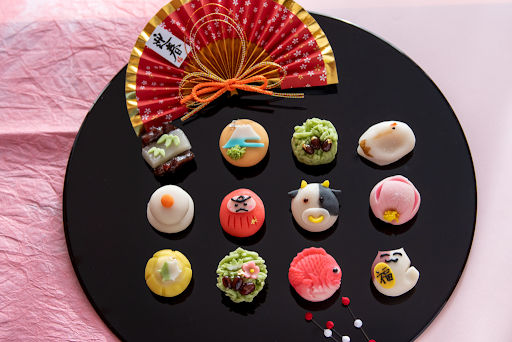
While higashi are most closely associated with wasanbon, any other wagashi can also benefit from its characteristics. Makers of yokan, a traditional Japanese jelly made from sweet red beans, have grown especially fond of it. Somewhat unexpectedly, some high-class sushi restaurants have also started it to amplify the taste of certain ingredients.
The possibilities are endless, but at more than three times the price of regular sugar, you probably won’t replace all your regular white sugar with it anytime soon. If you get a chance, however, we highly recommend giving it a try, whether as a wagashi or to sweeten your drink. Have you already encountered wasanbon before? What did you think? If not, is it on your list for your next visit?