


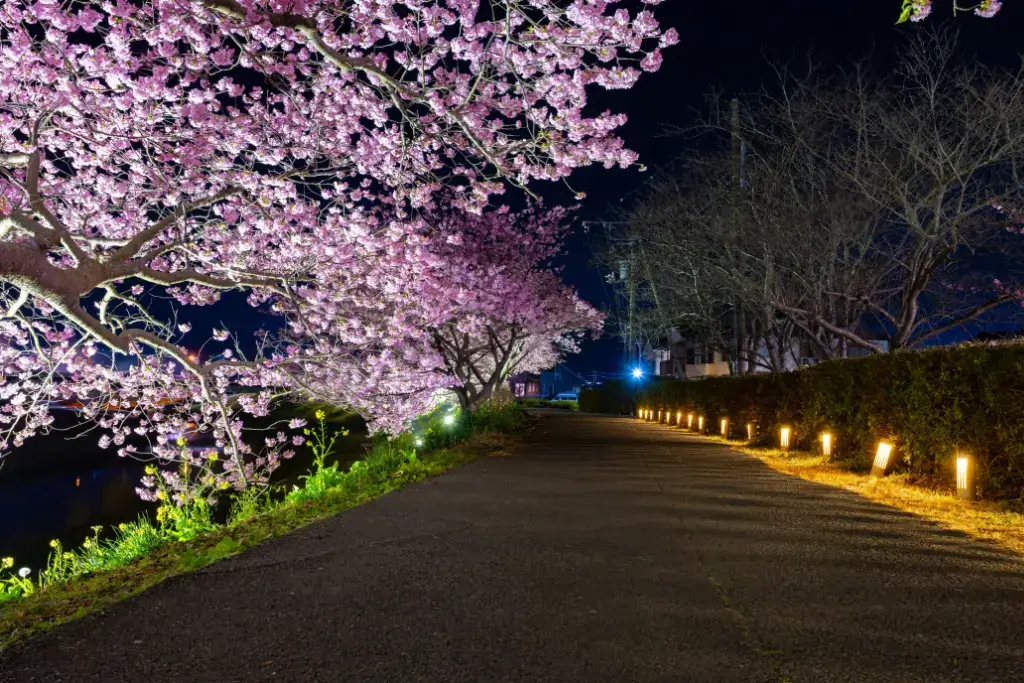
Spring evenings in Japan have a way of slowing everything down. When the sun sets, and lanterns start to glow, the country’s famous cherry blossoms begin to feel a little different—quieter, softer, and somehow more personal. This is called yozakura, or nighttime cherry blossom viewing. It’s not as loud or energetic as the daytime crowds you’ll see during hanami. Instead, it feels more like something you ease into—an evening walk, a pause, a moment to take things in without rushing.
There’s also something about seeing cherry blossoms at night that makes you notice details you might miss during the day. The way the light hits the petals, the shadows along the branches, even the sound of footsteps or a light breeze—it all becomes part of the experience. It’s less about taking photos and more about being there.
Yozakura in Nakameguro and Other Places
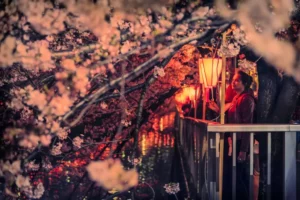
One of the most well-known spots for yozakura is along the Meguro River in Nakameguro. During the day, it’s packed with people, but at night the atmosphere shifts. Lanterns line the river, casting a warm glow on the cherry trees that arch overhead. When the petals are in full bloom, they almost form a ceiling of flowers, with their reflections shimmering in the water below.
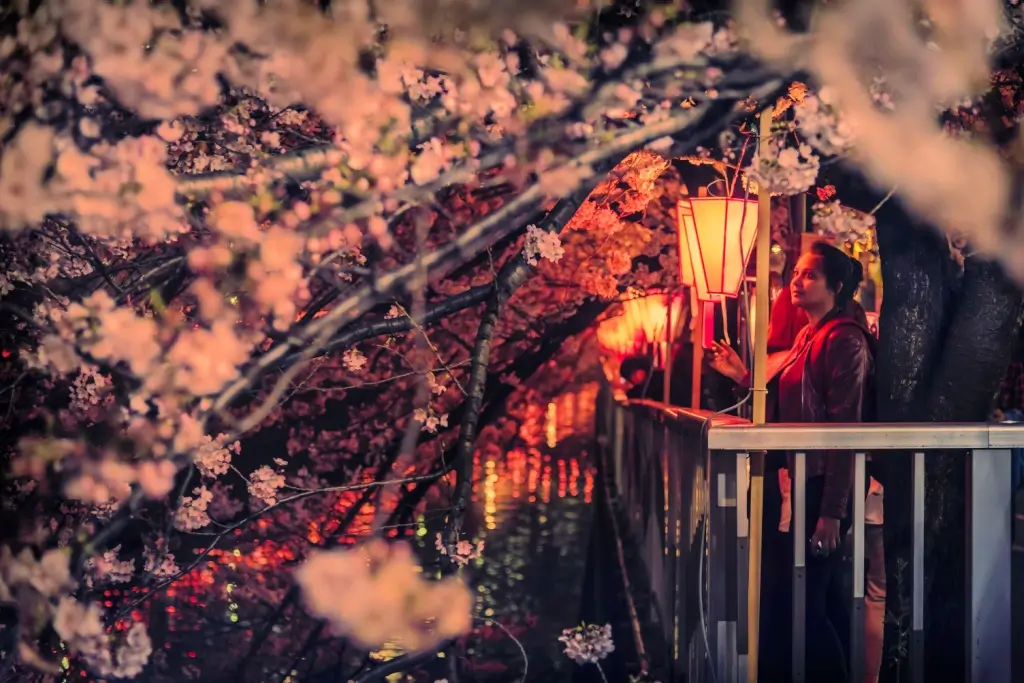
Walking here at night feels unhurried. People move at their own pace, stopping here and there to look up or lean over the railing. There’s usually a low buzz of conversation, but it never quite overwhelms the setting. If you catch it on a weekday or later in the evening, you might even find stretches that feel surprisingly calm.
Other places across Japan offer their own take on yozakura. In Osaka, cherry blossoms around historic sites take on a more dramatic look when lit up against castle walls. In Fukuoka, riverside paths are softly illuminated, making them ideal for a relaxed nighttime stroll. Smaller towns can be even more appealing if you’re looking to avoid crowds. With fewer people and less artificial light, the blossoms can feel more vivid, and the experience more personal.
Ueno Park
Ueno Park is one of the most famous cherry blossom spots in Tokyo, and it doesn’t completely quiet down at night—but it does change. Lanterns are strung along the main walkways, illuminating long rows of cherry trees. The effect is simple but striking.
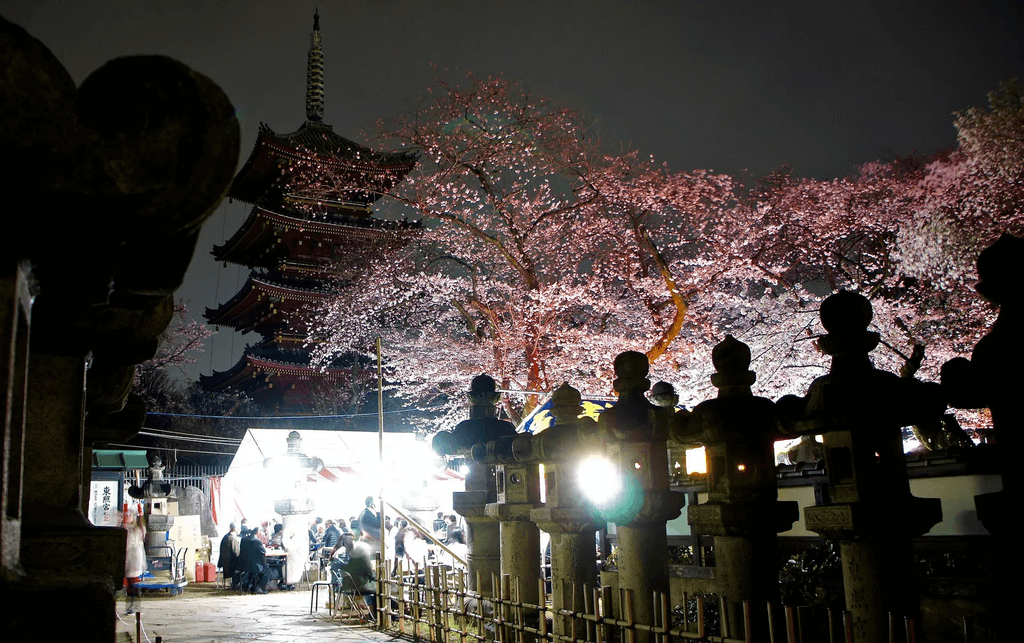
During the day, the park is filled with picnic blankets, food, and large groups. At night, it becomes more about movement. People tend to walk rather than sit, taking in the trees from different angles. The blossoms seem to glow against the dark sky, and the contrast makes them stand out in a way that’s hard to describe.
If you stay a little later, after the busiest hours, you’ll notice the shift even more. The crowds thin out, the noise fades, and the park takes on a quieter rhythm. It’s in those moments that yozakura really stands out as an experience.
The History of Sakura Poetry
Cherry blossoms have been part of Japanese culture for centuries, especially in poetry. During the Heian period, people would gather under blooming trees and write poems about what they saw and felt. These weren’t just descriptions of flowers—they were reflections on time, beauty, and how quickly things can change.
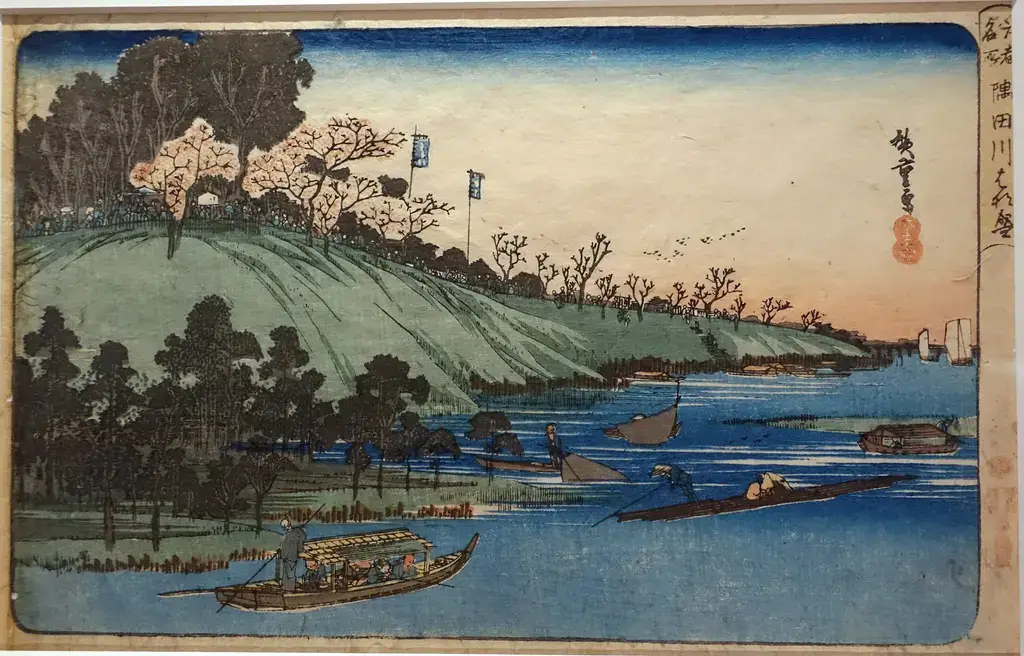
A well-known poet, Matsuo Bashō, often wrote about nature in a simple but powerful way. In his work, cherry blossoms became a symbol of how brief and delicate life can be. That idea still shapes how people see sakura today.
At night, that feeling seems to come more naturally. Maybe it’s the dim light, or the quiet that settles in, but it’s easier to slow down and take things in. Watching petals fall in the dark, knowing the blossoms won’t last much longer, gives the moment a kind of weight. It’s not heavy, exactly—just something you’re aware of.
Anko Donuts
Food has always been part of cherry blossom viewing, and nighttime is no exception. As you walk through popular spots, you’ll often come across small stalls selling seasonal snacks. One simple favorite is an anko donut—soft dough filled with sweet red bean paste.
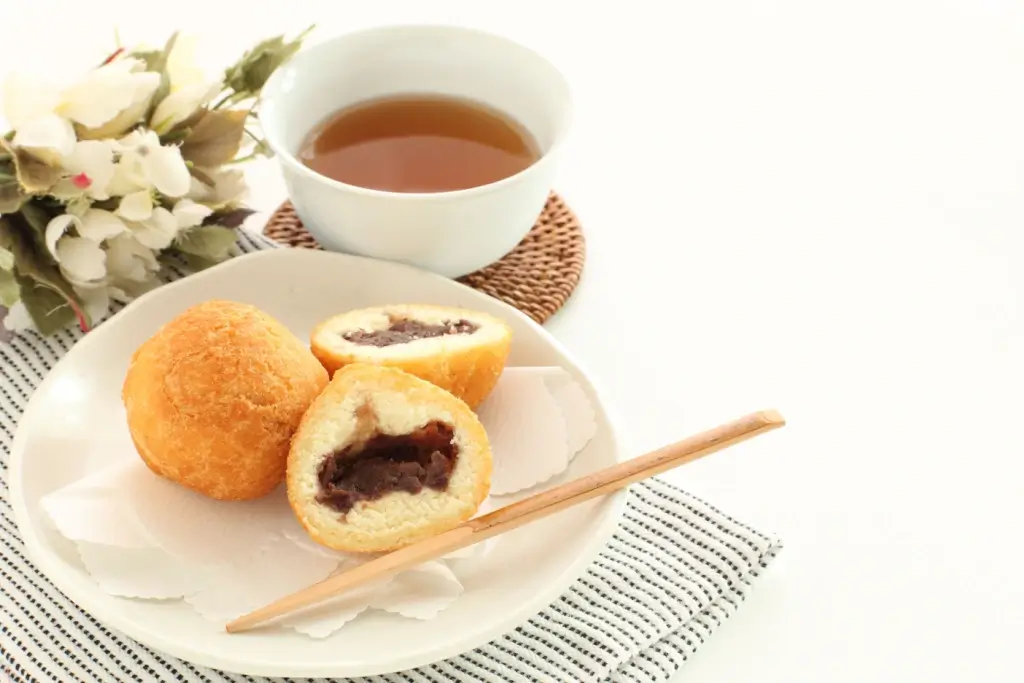
They’re easy to carry and eat while walking, which makes them perfect for yozakura. There’s something comforting about holding something warm in your hands while the night air still has a bit of a chill. It adds another layer to the experience, even if it’s just a small one.
You might not remember exactly what you ate, but you’ll probably remember the feeling—standing under the blossoms, taking a bite, and looking up at the branches overhead. It’s those small, ordinary moments that tend to stick.
Sumi-e
Nighttime cherry blossoms often evoke sumi-e, a traditional style that uses black ink and simple brushstrokes. Instead of focusing on bright colors or fine detail, sumi-e is about balance and suggestions, which leaves space for the viewer to fill in the rest.

Yozakura has a similar feel. The blossoms aren’t always clearly defined. Some fade into shadow, while others catch the light just enough to stand out. The branches can disappear into the darkness, giving the whole scene a layered, almost painted look. It’s a reminder that not everything needs to be fully seen to be appreciated. Sometimes, what’s partially hidden can be just as meaningful.
Kyoto at Night
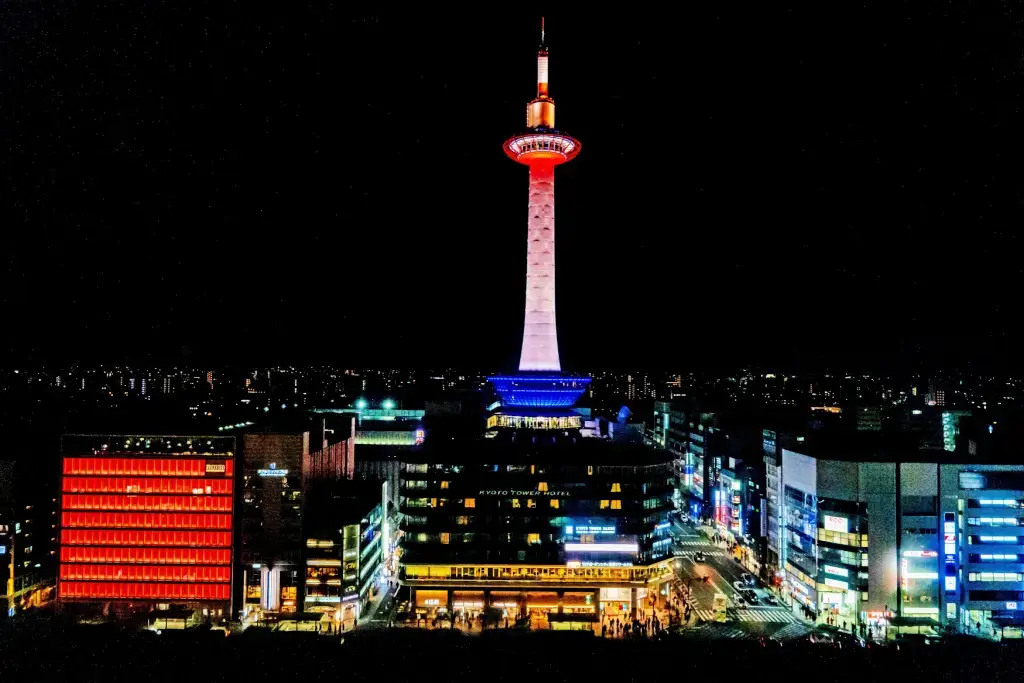
In Kyoto, nighttime cherry blossoms feel especially tied to the past. The city’s temples, narrow streets, and traditional buildings create a setting that feels almost timeless. Places like Maruyama Park are known for their illuminated trees, including large weeping cherry blossoms that seem to glow from within. Walking through areas like Gion during sakura season is a quieter experience than in larger cities. The lighting is softer, and the pace is slower. You’re more likely to hear footsteps than loud conversations.
There’s a sense of continuity in Kyoto—like the way people experience cherry blossoms now isn’t all that different from how they did centuries ago. That feeling becomes even stronger at night, when modern distractions fade into the background.
Seeing cherry blossoms at night is a different kind of experience. It’s not as bright or energetic as daytime viewing, but that’s part of what makes it special. It gives you space to slow down, to notice small details, and to take in the atmosphere without feeling rushed.
Whether you’re walking along the Meguro River, moving through Ueno Park, or wandering Kyoto’s quiet streets, yozakura offers another way to connect with cherry blossoms. It’s a little more subtle, a little more reflective—and often, a little more memorable because of it.